

















Get a Free Accessibility Check of your Website
Run Your CheckWebsite accessibility is becoming a bigger topic for parish and town councils following the introduction of AGAR Assertion 10 as part of the 2025/26 Annual Governance and Accountability Return (AGAR).
While accessibility obligations under the Public Sector Bodies (Websites and Mobile Applications) Accessibility Regulations 2018 (PSBAR) are not new, many councils are now taking a closer look at their websites, PDFs, accessibility statements, and ongoing compliance processes as digital governance comes under greater scrutiny.
This guide breaks down what Parish and Town councils need to know about AGAR Assertion 10 and accessibility compliance.
What is AGAR Assertion 10?
Assertion 10 is a requirement included within the 2025/26 AGAR process for parish and town councils in England and Wales.
The assertion focuses on digital and data compliance, requiring councils to confirm they have appropriate governance, policies, and processes in place across areas such as:
- Website accessibility
- UK GDPR compliance
- Council-owned email domains
- IT and security policies
- Transparency and publication requirements
As part of this, councils are expected to demonstrate that their websites and digital content meet accessibility requirements under PSBAR.
This includes compliance with WCAG 2.2 AA standards and maintaining an up-to-date accessibility statement.
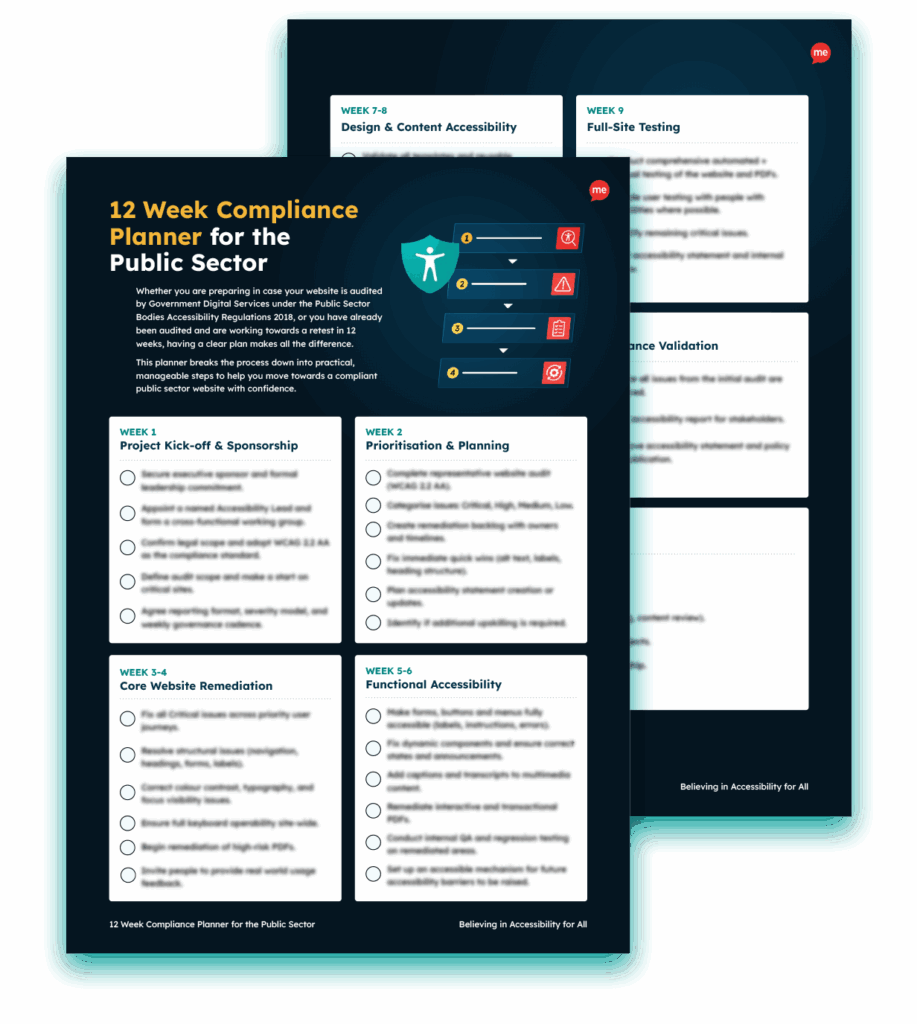
Whether you’ve already received an audit notice or you want to be prepared, this free 12 Week Compliance Planner helps you take control of the process. It turns what can feel like an overwhelming task into a clear, week-by-week plan, so you always know what to focus on next.
How AGAR Assertion 10 Is Likely to Be Reviewed
One reason AGAR Assertion 10 is attracting attention is because councils are beginning to better understand how the process may be reviewed internally and externally.
Before AGAR is submitted, councils complete an internal audit process where governance records, policies, and compliance evidence may be reviewed against the AGAR assertions.
This can include checks around:
- Accessibility statements
- GDPR policies and privacy notices
- Council-owned email domains
- Website accessibility compliance
- IT and governance policies

The AGAR Annual Governance Statement is then approved by the full council, with councillors formally agreeing whether the authority can answer “Yes” to each assertion.
For councils, this means accessibility is increasingly becoming a governance issue rather than simply a website consideration.
A growing focus is not only whether accessibility issues exist, but whether councils can demonstrate that accessibility is being actively monitored and managed over time.
The Growing Challenge Around PDFs and Documents
One of the biggest accessibility challenges facing Town and Parish councils, as well as the wider public sector is PDF documents.
This includes:
- Meeting agendas
- Minutes
- Policies
- Financial reports
- Planning documents
- Public notices
- AGAR documentation
- Strategy documents
Under accessibility regulations, these documents must be accessible to users with disabilities. Many councils assume that exporting a document as a PDF automatically makes it accessible, but this is often not the case.
Common accessibility issues include:
- Missing heading structures
- Poor reading order
- Missing alt text for images
- Low colour contrast
- Scanned documents that screen readers cannot interpret
- Missing document tags and navigation
For councils managing years of historic documents, identifying and prioritising inaccessible PDFs can feel overwhelming.
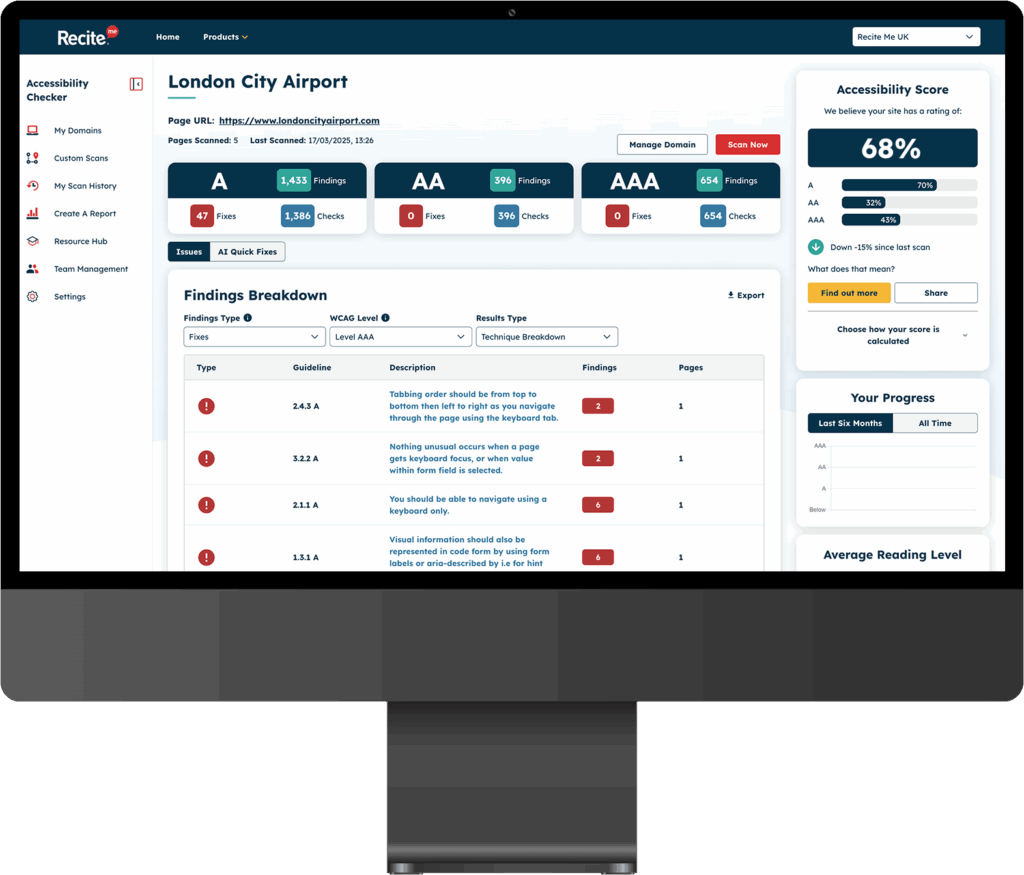
Scan your homepage and receive access to an interactive accessibility dashboard that:
- Shows the accessibility errors found on your page
- Explains why each issue matters
- Provides clear guidance on how to fix
Accessibility Compliance Requires Ongoing Monitoring
Accessibility compliance is not a one-time task.
Regular accessibility scans and audits can help councils identify issues across websites and documents, understand areas of risk, and prioritise improvements.
However, identifying issues is only part of the process. The findings of accessibility scans and audits should also be reviewed, prioritised, and remediated over time.
Accessibility compliance also involves:
- Monitoring new and existing content
- Remediating inaccessible pages and documents
- Prioritising issues based on user impact
- Maintaining accurate accessibility statements
- Reviewing accessibility regularly as websites and content evolve
For councils, the focus should not be on achieving perfection overnight. Instead, it should be on building a proportionate and realistic accessibility approach that can be evidenced over time.

What Might Councils Need to Evidence?
While approaches may vary, councils should expect increasing scrutiny around how accessibility responsibilities are being managed.
This may include evidence such as:
- An up-to-date accessibility statement
- Website accessibility audits
- Records of identified issues
- Plans for remediation and improvement
- Monitoring processes
- Staff awareness or accessibility guidance
- Accessible document processes
Councils may increasingly be expected to demonstrate that accessibility is being actively managed through audits, monitoring, remediation plans, accessibility statements, and governance processes.
As Assertion 10 becomes more widely understood, councils that cannot evidence accessibility efforts may face additional scrutiny during audit and governance reviews.
Practical Steps Councils Can Take Now
For councils unsure where to begin, taking a phased and practical approach can help make accessibility more manageable.
Some useful starting points include:
- Review your accessibility statement – Ensure your statement is accurate, up to date, and reflects the current state of your website and documents.
- Audit your website and documents – Identify key accessibility issues, including inaccessible PDFs and high-traffic content.
- Prioritise high-impact content – Focus first on the pages and documents residents use most frequently.
- Create an accessibility action plan – Document how issues will be monitored and addressed over time.
- Put ongoing monitoring in place – Accessibility is not a one-time project. Regular reviews and audits can help councils demonstrate continuous improvement.
Accessibility Is Becoming a Bigger Part of Digital Governance
AGAR Assertion 10 reflects a wider shift in how digital accessibility is being viewed across the public sector.
Accessibility is no longer simply a website consideration. It is increasingly becoming part of governance, accountability, and risk management discussions.
For Town and Parish, now is the time to better understand accessibility responsibilities, review existing content, and put practical plans in place to support ongoing compliance efforts.

AGAR Assertion 10 FAQs FAQs
Looking for a recap or quick summary? Here are a few of our most frequently asked questions to help you get to grips with the essentials:
Why was Assertion 10 introduced?
AGAR Assertion 10 was introduced to make digital compliance more explicit and auditable, reflecting the increasing importance of websites, email, and data protection in council operations.
What website standard is required for AGAR Assertion 10 compliance?
Council websites should conform to WCAG 2.2 level AA standards.
Does every UK council website need an accessibility statement?
Yes, every council website should publish a current accessibility statement explaining compliance status, known issues, and how someone can request information in another format.
Do council PDFs need to be accessible for Assertion 10 compliance?
Yes, where documents are required for public use, they should be made accessible.