Facebook Tracking Pixel

The Importance of Accessibility in the Healthcare Industry

Published By:

two doctors sharing an ipad and working together

TABLE OF CONTENTS

Get Your Free Accessibility & Inclusion Toolkit

Download Now

Accessibility is essential in all areas of life, but nowhere more so than in the healthcare industry. With around a quarter of the population having some kind of disability, healthcare organisations need to prioritize making sure that their services are accessible, inclusive, and easy to navigate for all users.

Failure to remove accessibility barriers can prevent individuals with disabilities from accessing essential healthcare services and impact their quality of life. This post will explore the importance of accessibility in the healthcare industry, including common barriers and how to create more inclusive experiences.

What does accessibility mean in the healthcare industry?

Accessibility in the healthcare industry means that all individuals are able to access healthcare services, information, and environments, regardless of disability, age, or circumstances. Of course, individuals with permanent and temporary disabilities often need to access healthcare, so removing barriers should be a top priority to ensure people can get the care that they need.

Accessibility in healthcare involves two key areas:

Digital accessibility

These days, many health services are digital. Websites, mobile apps, online services, and patient portals are commonly used for making appointments, accessing information, and managing prescriptions.

Digital accessibility involves removing these barriers so that everyone can access and understand online content. This includes individuals with visual, auditory, motor, and cognitive disabilities.

cartoon illustration of people of varying ages, nationalities and abilities

Physical accessibility

Physical accessibility involves removing barriers to ensure that healthcare facilities are accessible and usable by individuals with disabilities. This typically involves ensuring that there are ramps for wheelchairs, lifts, and accessible restrooms. Physical accessibility is vital for ensuring that individuals with a range of disabilities have equal access to physical healthcare services.

Download our Accessibility Healthcare Guide

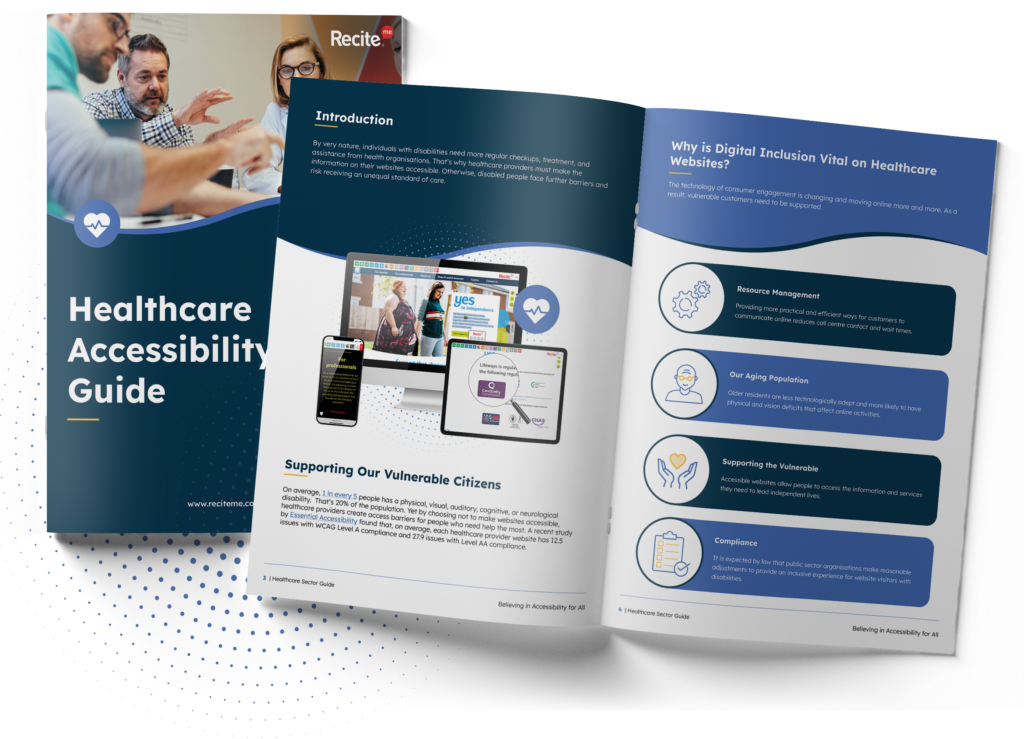
Download our inclusive healthcare guide which looks at why digital barriers are a problem, who needs support, the importance of inclusive education, Recite Me clients, and an overview of our data from the past year.

Healthcare Sector Guide Mock Up

What are the most common digital accessibility barriers in healthcare?

With healthcare services becoming increasingly digital since the COVID-19 pandemic, this area remains relatively new, which means that common digital accessibility barriers can still make access challenging for users with a range of disabilities. The most common digital accessibility barriers in healthcare include:

Several languages

Complex language and medical jargon

Complex medical language and jargon is one of the most common digital accessibility barriers in healthcare and can prevent users with cognitive disabilities, low literacy levels, or a lack of basic medical knowledge from interpreting the content effectively, which can be dangerous.

This is why all online content should be simple with plain, clear language used. This will improve comprehension so that patients can educate themselves and make informed decisions.

Inaccessible forms and booking systems

Digital web forms and booking systems can be challenging to navigate, especially for users with disabilities who rely on assistive technologies. Common issues include missing labels, unclear instructions, and poor error handling, which can prevent users from filling in forms and making important appointments. This is why all forms must be easy to navigate with a clear structure that actually makes sense.

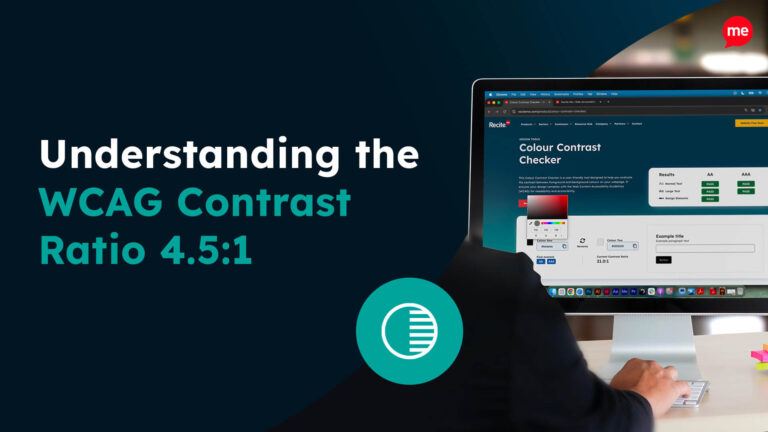
colour contrast checker

Colour and contrast issues

Visitors with visual impairments can struggle to read online content with low colour contrast. This is why there needs to be sufficient contrast between the text and background to improve readability, ensuring everyone can access important online healthcare information. The Web Content Accessibility Guidelines (WCAG) recommends a colour contrast ratio of at least 4.5:1 for regular text and 3:1 for large text.

Lack of keyboard navigation

Some users are unable to use a mouse to navigate websites and instead rely on keyboard navigation. Therefore, it is essential that all elements of your digital content and online services can be accessed via keyboard, including forms, menus, and buttons.

Keyboard icon
Audiobook and Screen reader icon

Poor screen reader compatibility

Screen readers are one of the most commonly used assistive technologies as they communicate the information to users with visual impairments. Poorly structured content makes it challenging for screen readers to understand the structure and convey the information correctly. Common issues include missing headings, incorrect tagging, and unclear navigation. By removing these barriers, users with visual impairments are able to access and interpret online content effectively.

Multimedia without alternatives

Multimedia content, including images and videos, is commonly used in online healthcare content. But multimedia without alternatives can exclude users with visual and auditory disabilities. This is why all forms of multimedia should include alternatives, including captions, transcripts, alt text, or audio descriptions.

A animation of a man lying down, learning about the importance of closed captions on multimedia content.
ADHD Icon

Cognitive overload and stressful design

Healthcare content can feel overwhelming, especially when users are experiencing health-related stress and anxiety. Complicated layouts, dense walls of text, too many multimedia elements, and unclear navigation can create cognitive overload, which can make it difficult to process information. This is why simple is always best when it comes to healthcare design and content.

Mobile accessibility gaps

Keep in mind that many users access healthcare services on a mobile device these days. Despite this, many websites and platforms are not mobile optimised, which can create barriers in terms of navigation and accessing online services and information.

Common physical accessibility barriers in healthcare

There are also a number of common physical accessibility barriers in healthcare that can impact access to users with a range of disabilities. These barriers must be removed to ensure inclusivity for all.

Barrier categoryExamples
Building accessSteps, heavy doors, narrow entrances
Parking and transportLimited accessible parking, distant drop-off points, poor transport links
Wayfinding and signageUnclear directions, low contrast, small text
Reception and waiting areasHigh desks, limited seating options, no quiet spaces
Corridors and movementNarrow pathways, clutter, poor lighting, uneven flooring
Toilets and changing facilitiesLack of accessible toilets, limited space, poorly positioned fixtures
Examination and treatment roomsNon-adjustable equipment, limited space, inflexible layouts
Communication in physical spacesNo hearing loops, high background noise, reliance on audio-only announcements
Sensory environmentHarsh lighting, strong smells, noisy or busy environments
Appointment processes (in-person)Long standing queues, no seating, inflexible check-in systems

Why is accessibility important in the healthcare sector?

Accessibility is important in the healthcare sector for wide-ranging reasons. A few of the most notable reasons include:

The Application of Diversity and Inclusion Practices in Healthcare

Improving health outcomes

Users with permanent and temporary disabilities often require regular access to healthcare services. By ensuring that all online and physical services are fully accessible and inclusive to all, health outcomes are improved. This is because patients are able to book appointments, access care, understand information, and follow treatment plans effectively.

Equal access to healthcare services

Everyone should have equal access to healthcare services. This can be achieved by removing digital and physical accessibility barriers, allowing individuals with wide-ranging disabilities to access healthcare services effectively. With around 25% of the population having some kind of disability, accessibility should be a top priority to prevent exclusion and/or delays in receiving care.

illustration showing a webinar on a laptop, surrounded by accessibility and public sector icons

Legal responsibility

Accessibility is important in terms of equal access, but healthcare providers also have a legal responsibility to ensure that their services are accessible to all. Failure to comply with accessibility laws, such as the EAA and ADA, can lead to complaints, legal action, penalties, and a damaged reputation. The costs of non-compliance can be in the millions, so accessibility should be a priority for reducing legal risk.

Improving patient experience

The patient experience should always be a priority in healthcare, but experiences can vary significantly from person to person. Many individuals have visual, auditory, motor, and cognitive impairments, which can affect their experience both online and offline. By removing common accessibility barriers, you can improve the journey for individuals with disabilities so that they feel supported throughout.

How the Recite Me Toolbar can help create more inclusive healthcare websites

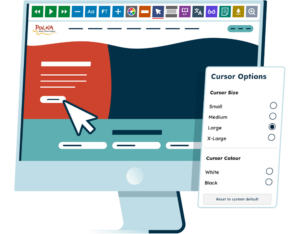
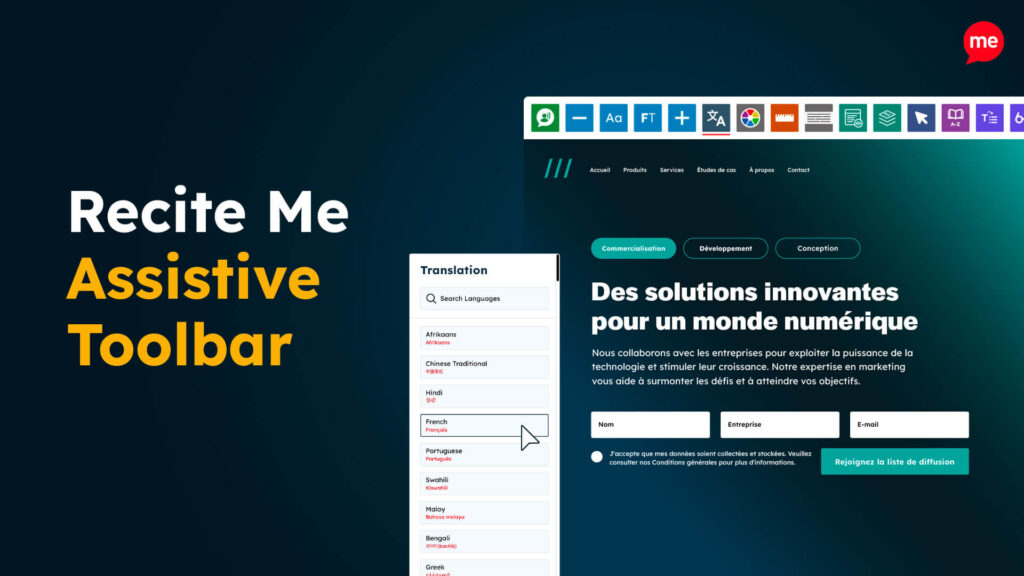
The Recite Me Toolbar is a useful tool for healthcare providers as it can support users with a wide range of disabilities and access needs by enabling them to customise their experience. Visitors are able to navigate the website and consume content in ways that work best for them. This includes the use of features such as:

Image of the Recite Me toolbar being used on the Polka Theatre website.
  • Text to speech
  • Translation
  • On-screen sign language
  • Audio file downloads
  • Adjustable font size and style
  • Adjustable colour settings
  • Enlarged cursor
  • Screen mask and ruler
  • AI simplified content
  • Built-in dictionary (particularly useful for medical content)

Essentially, the Recite Me Toolbar enhances digital accessibility by giving users the ability to customise their own experience and make any required adjustments.

How the Recite Me Accessibility Checker can help design more accessible healthcare websites

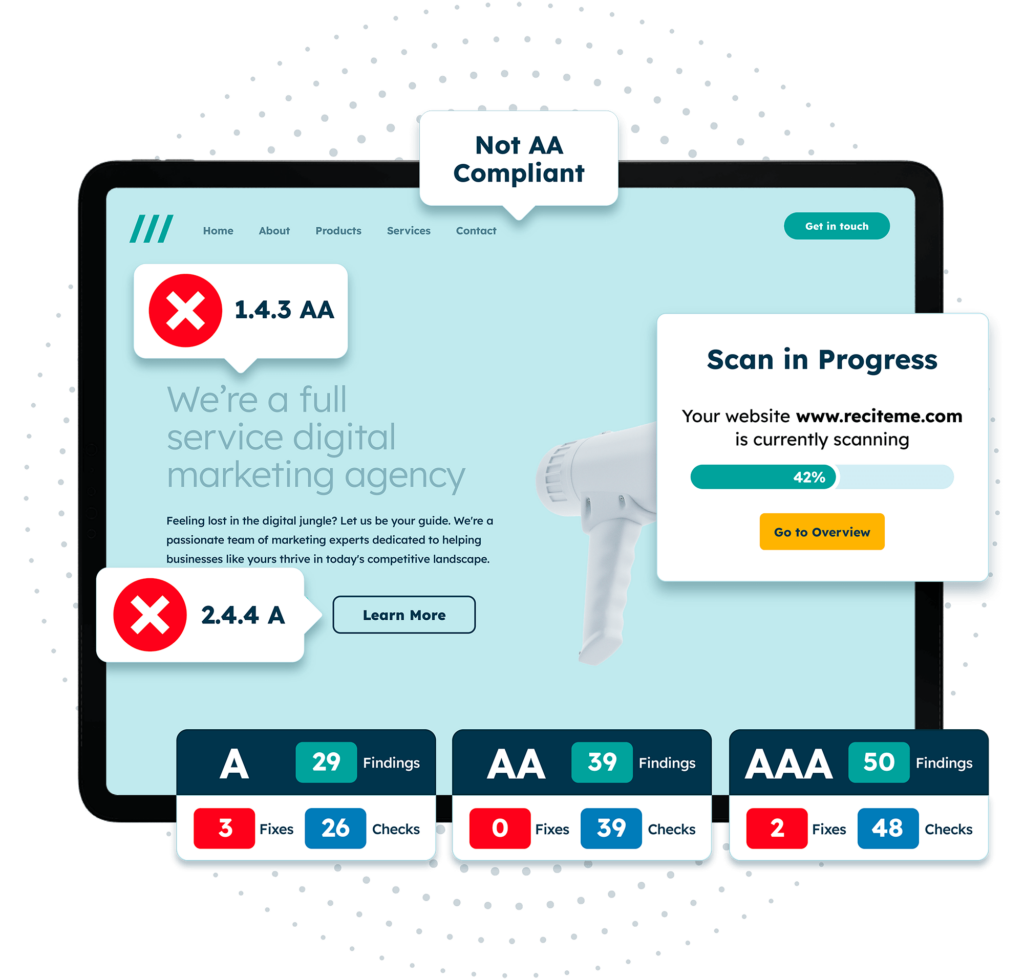
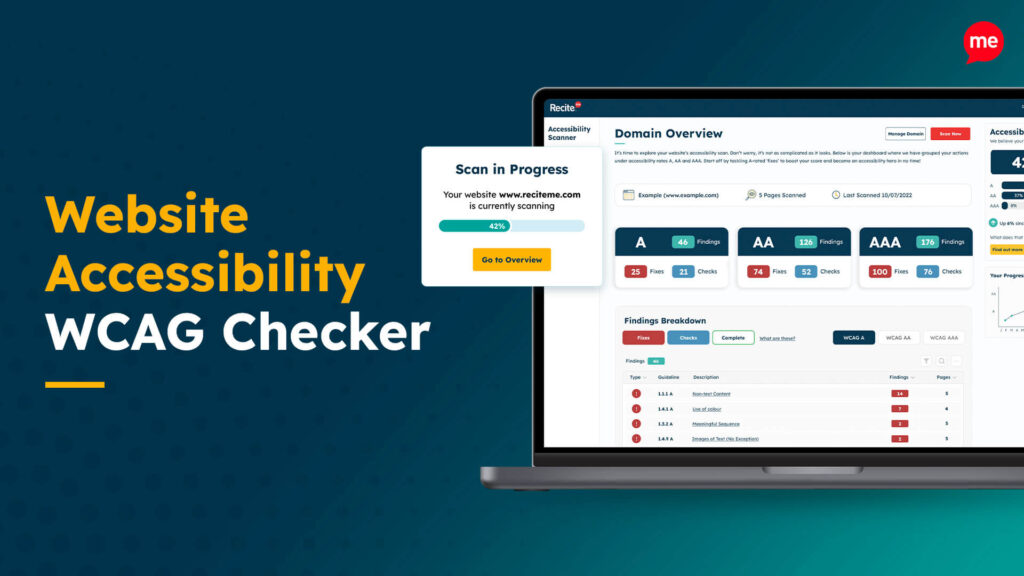
The Recite Me Accessibility Checker is another useful tool when it comes to website design. This is a tool that will scan your website for accessibility issues, allowing you to detect and fix issues before publishing. The website is scanned against WCAG criteria to detect common issues, such as missing alt text, inaccessible forms, and insufficient colour contrast. Automated fixes make it quick and easy to address accessibility issues and ensure alignment with WCAG, which can help with compliance with accessibility laws.

Get a Free Accessibility Check of your Website

Get a free automated accessibility check of your websites homepage. This will identify and highlight any compliance issues on your website. Followed by recommendations on how to implement the necessary changes to make your website more accessible.

EAA auditing

Our final take on the role of accessibility in healthcare services

Accessibility is vital in the healthcare sector, particularly with many individuals with permanent and temporary disabilities requiring access to healthcare services regularly. There are many physical and digital accessibility barriers to be aware of that can exclude users, so it’s important for healthcare providers to do their best to remove these barriers where possible. 

You can get started today by running a free website accessibility scan of your homepage. Alternatively, you can contact a member of our accessibility team for more personalised support.

Healthcare Accessibility FAQs

Looking for a recap or quick summary? Here are a few of our most frequently asked questions to help you get to grips with the essentials:

There are many risks of poor accessibility in healthcare for providers and patients. For instance, healthcare providers may face complaints, investigations, and legal action under equality legislation, which can result in significant penalties and other costs. Poor accessibility also prevents individuals from accessing essential healthcare services, which can lead to delayed diagnosis and poorer healthcare outcomes.


Healthcare accessibility issues are often reported in a few ways. This includes patients raising concerns directly with the provider, complaint procedures, and patient liaison services. Issues can then be escalated to governing bodies or regulators if they are not resolved.

Accessibility is not a one-time fix and should be reviewed regularly. Accessibility testing should be conducted at least annually and when any updates or changes are made to either physical or digital environments.

Check out our Products & Services

Ready to take your first steps towards digital accessibility compliance? Then see how we can support your journey with our accessibility solutions:

Website Accessibility WCAG Checker

Web Accessibility Checker

Scan, detect, fix, and maintain accessibility compliance standards on your website.

Recite Me Assistive Toolbar

Assistive Toolbar

Make your website an inclusive and customisable experience for people with disabilities.

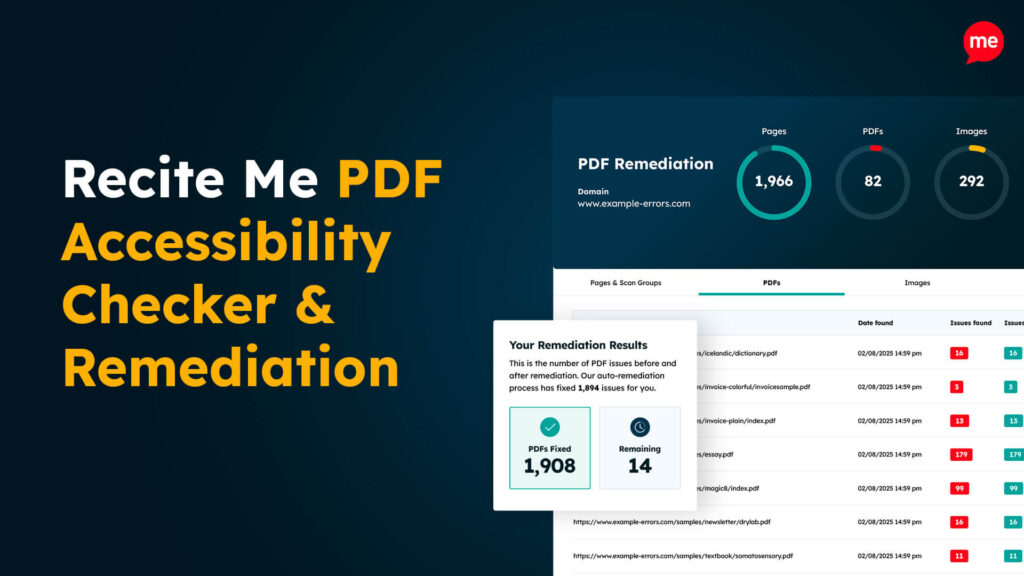
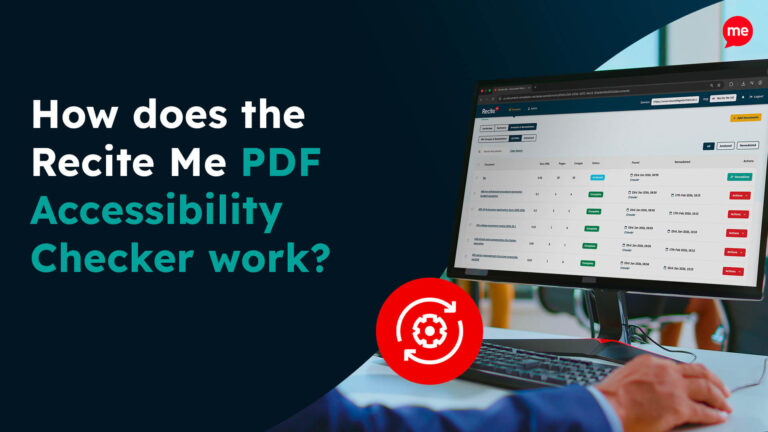
Recite Me PDF Accessibility Checker & Remediation

PDF Accessibility Checker

Check your PDFs are compliant with accessibility standards and run automated fixes.

Related Content