The B Corp certification shows your business meets verified standards for social and environmental impact. It’s a huge signal of trust, and one that both new and existing customers can take confidence in.
But the rules and requirements have evolved over the years. Certification used to require a verified score of at least 80 out of 200. Now there are no points, and B Lab sets fixed requirements across seven impact topics. Digital accessibility is a big part of this puzzle, with WCAG conformance expected across websites and digital content.
Ready to learn more about the certification? Keep reading for the important details.
What is the B Corp Certification?
B Corp certification is basically a stamp of approval that shows for-profit companies have met certain social and environmental standards. To achieve this certification, organisations are expected to be open about how they operate and adhere to a set of seven standards outlined by the B Lab.
There is no minimum company size for the certification, but charities and non-profits are currently excluded. At the time of writing, more than 10,000 companies hold the B Corp certificate. It’s a community that is growing quickly around the world.
What is the B Lab?
B Lab is the non-profit engine behind the B Corp movement. It was originally founded in 2006 and has created the standards, policies, and tools required for awarding and managing the certifications.
So if you’ve got your eyes set on landing a B Corp certificate, B Lab is the one you’ll need to impress.
What are B Lab’s standards?
The latest standards from B Lab were published in April 2025, but were phased in gradually throughout 2026. These new standards have removed the old point-scoring system and introduced a mandatory minimum performance requirement across seven core impact topics.
Here’s a quick summary of the seven topics:
Fair work
Human rights
Climate action
Purpose and stakeholder governance
Justice, Equity, Diversity, & Inclusion (JEDI)
Government Affairs and Collective Action
Environmental Stewardship and Circularity
Get a Free Accessibility Check of your Website
Run a scan to identify WCAG issues on your website's homepage. Then, use our recommended changes to achieve compliance with the latest accessibility standard.
What are the minimum requirements for B Corp?
Companies must clear two layers. First come the foundation requirements, which act as a gate. Then come the performance requirements across the seven topics.
Foundation requirements
Before you’re even considered for B Corp certification, you’ll need to tick a few basic requirements.
Here is a shortlist of what’s expected:
Be a legally incorporated for-profit company
Have operated for at least 12 months
Follow local and national laws
Stay out of industries that undermine B Lab’s Theory of Change
Be open about your performance
Complete a risk profile using B Lab’s risk tool
Adopt the B Corp legal requirement
Timing depends on size. Companies with 0 to 49 employees generally need the legal change before certification. Larger limited companies may have up to 12 months after, and LLPs 90 days.
The B Corp legal requirement in the UK
B Lab requires companies to write stakeholder governance into their governing documents. For many UK companies limited by shares, that means amending the Articles of Association, usually by special resolution.
The wording expands your purpose to create a material positive impact on society and the environment, not just shareholder value. It also asks directors to weigh stakeholders alongside shareholders.
UK directors already have to consider wider factors under section 172 of the Companies Act 2006, so the change formalises duties you already carry. Use B Lab’s current wording for your entity type, and consider legal advice.
Risk profile and eligibility checks
B Lab defines “material involvement” in excluded industries using revenue and value chain thresholds. New applicants must meet this in Year 0, while existing B Corps have until Year 3.
The risk tool sets extra due diligence sub-requirements based on your risk profile and size. A summary of your risk profile appears on your public B Corp profile.
One thing to keep in mind, though: B Lab paused new applications in August 2026 from financial services companies with more than $1 billion in annual revenue.
Performance requirements
You must also meet performance requirements in all seven topics. Each topic is split into sub-requirements marked Year 0, Year 3, or Year 5.
Year 0 applies to your first certification. In Year 3, you’re expected to build upon the existing requirements from Year 0, improving your overall performance. And Year 5 works the same way. Audits only test the sub-requirements for that specific year.
Additionally, larger companies (250 to 999 employees or $75m to $350m in revenue) usually face more sub-requirements, so certification is now a five-year path, not a one-off score.
The importance of digital accessibility for JEDI
At Recite Me, we’re all about helping organisations build a more accessible world for their employees and customers. Thankfully, the B Corp understands the importance of this, as its JEDI standards speak to accessibility specifically.
What B Lab asks for
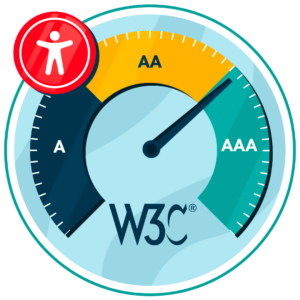
Two JEDI options involve digital accessibility: your public website (JEDI2.m) and internal digital communication tools (JEDI2.l). Both need WCAG Level AA or AAA conformance, confirmed through strict testing.
To add to this, your WCAG compliance must be met continuously across Year 0, 3, and 5, so one-off fixes will not be enough.
You’re notified in real time as new WCAG compliance issues arise, giving you the time to make the necessary changes.
How does the B Corp Certification process work?
Getting your hands on a B Corp certificate doesn’t have to be a super complicated process. Especially not with the new setup.
Here are some of the steps you’ll run through:
Check your eligibility and set up your B Impact account.
Review the Year 0 requirements for your size, sector, and profile.
Amend your Articles with B Lab’s legal wording.
Complete the risk tool and the self-assessment.
Submit your application so B Lab can confirm you are eligible.
An auditor reviews your evidence and interviews your team.
Receive an audit report listing any nonconformities.
Fix them, then get certified.
What happens during the audit
Every audit starts with a plan and includes opening and closing meetings, interviews, and set windows to submit extra evidence.
Findings come in two sizes. A minor one might be a few pages missing image alt text, or one internal tool with a colour contrast fault, where the cause was an oversight. A major one means a missing system, such as a website with no accessibility testing or user feedback from people with disabilities.
Again, audits continue after certification, so you need to be constantly showing improvements. Micro and small companies are audited at Year 0, 3 and 5, while larger companies are likely to be audited every year.
How long does it take to get certified?
B Lab estimates two to six months from submission to certification. But this can vary, especially if your organisation has a long list of major nonconformities.
Thankfully, the report sets a deadline for closing each one. But that deadline starts ticking immediately after submission, so we recommend trying to minimize pre-submission errors as much as possible.
How much does B Corp certification cost?
Typically, there are three costs associated with the B Corp certification, including submission, verification, and annual certification. But here’s the catch: these fees can vary widely depending on the scale of your organisation and the region in which it’s based.
The table below outlines an example of the fees in the UK, exclusive of VAT:
Revenue bracket
Submission fee
Verification fee
Annual certification fee
£0–£149,999
£200
£360
£1,000
£150,000–£499,999
£200
£720
£1,250
£500,000–£999,999
£200
£1,080
£1,500
£1,000,000–£2,499,999
£200
£1,440
£2,000
£2,500,000–£4,999,999
£200
£1,800
£2,500
£5,000,000–£7,999,999
£400
£3,600
£3,000
£8,000,000–£9,999,999
£400
£3,600
£4,000
£10,000,000–£14,999,999
£400
£3,600
£6,000
£15,000,000–£19,999,999
£400
£3,600
£8,500
£20,000,000–£29,999,999
£400
£3,600
£12,000
£30,000,000–£49,999,999
£400
£3,600
£16,000
£50,000,000–£74,999,999
£600
£5,400
£20,000
£75,000,000–£99,999,999
£600
£5,400
£25,000
£100,000,000–£174,999,999
£800
£7,200
£30,000
£175,000,000–£249,999,999
£800
£7,200
£35,000
£250,000,000–£499,999,999
£800
£7,200
£40,000
£500,000,000–£749,999,999
£800
£7,200
£45,000
£750,000,000–£999,999,999
£800
£7,200
£50,000
If your organisation has turnover above £1,000,000,000, you’ll need to contact B Lab directly.
What are the benefits of B Corp Certifications for companies?
Certification takes work, but it pays back in several ways:
Credible proof: an independent, B Lab-approved third party certifies you.
Community: you join an exclusive community of more than 10,000 companies.
Stronger positioning: it can strengthen your brand, talent, and investor conversations.
Built-in improvement: mandatory milestones at three and five years keep progress on track.
Safer green claims: the model helps companies comply with the EU’s green claims directive, and much of the new brand messaging is only open to companies certified on the new standards.
Get a Free Accessibility Check of your Website
Run a scan to identify WCAG issues on your website's homepage. Then, use our recommended changes to achieve compliance with the latest accessibility standard.
Final verdict: Working towards your first B Corp certificate
B Corp certification is tougher than it used to be, but the path is clearer. Pass the foundation requirements, then meet the performance requirements for all seven impact topics, scaled to your size.
B Lab’s new standards replaced the previous points-based system with mandatory requirements across seven impact topics, including fair work, human rights, climate action and digital accessibility.
Yes, B Lab’s JEDI standards include requirements for digital accessibility. Public websites and internal digital communication tools must meet WCAG Level AA or AAA conformance requirements.
WCAG conformance forms part of the digital accessibility requirements under the JEDI standards. The requirements apply across Years 0, 3, and 5, meaning accessibility needs to be maintained rather than addressed as a one-off task.
B Lab estimates that certification takes around two to six months from submission, although the timeframe can vary depending on the organisation and any nonconformities identified during the audit.