
















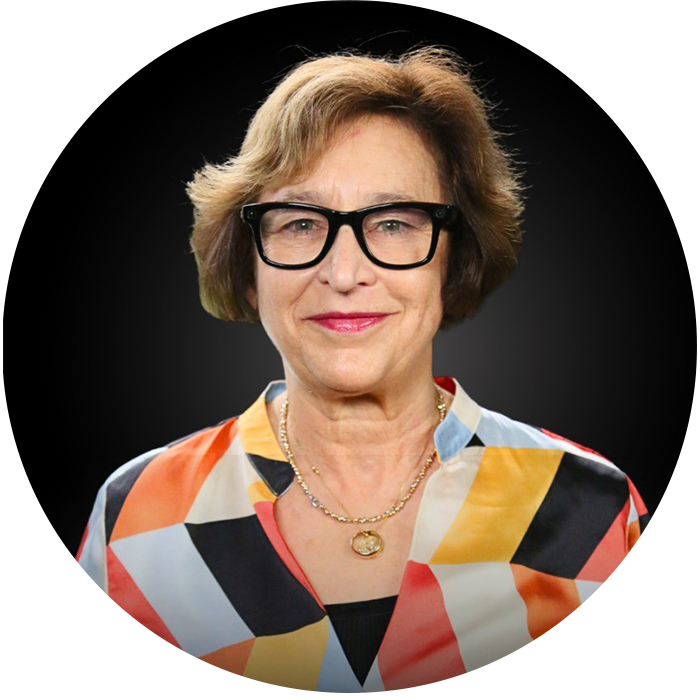
Guest Blog Author: Amanda Kirby MBBS MRCGP FCGI FRSA
Amanda is the co-founder and former CEO of Do-IT Solutions, and a leading expert in neurodiversity. A GP, author, researcher and emeritus professor, she has decades of experience across education, healthcare and employment, combining professional expertise with her own lived experience as a neurodivergent person. She has published extensively on neurodiversity, including the award-winning Neurodiversity at Work.
Neurodiversity describes the natural variation in how human brains process information, communicate, learn, remember, plan and respond to the world. We are all neurodiverse.
People may be considered neurodivergent because they deviate from what is considered the average or typical way of understanding, moving, responding, processing or communicating compared to the majority.
People who have traits or considered for example to be autistic, have ADHD, dyslexia, developmental coordination disorder ( also known as dyspraxia), Developmental Language Disorder; dyscalculia, Tourette syndrome or other forms of cognitive difference are often described as neurodivergent. Most of us don’t fall into simple categories and most people have one of these conditions have more than one condition. Alongside the challenges we recognise that each person will have variable and sometimes called ‘spiky profiles’ with significant strengths. Not everyone has a formal diagnosis, wants one or can fit into one.
The concept of neurodiversity is a reminder for all of us that everyone experiences the world in different ways. It also reminds us that there is no single “normal” or ‘typical’ way to think, learn, understand or communicate. This matters greatly when public services are increasingly accessed through websites, portals and online forms and if they are designed from a viewpoint of the ‘typical’ end user. This will always mean excluding a large percentage of people who don’t fit this model.
When a simple task is not simple
Booking a GP appointment, confirming an outpatient appointment or reporting a missed bin collection may appear to be straightforward tasks.
However, the process can become difficult when a website has:
- unclear instructions;
- several different login systems;
- unexplained acronyms;
- long forms with no option to save progress;
- questions that require detailed information from memory;
- strict time limits;
- error messages that do not explain what went wrong;
- or important information hidden across several pages.
For someone with challenges related to attention, working memory, language processing, reading, planning or anxiety, each additional step can increase the likelihood that the task will not be completed.
The problem is not necessarily that the person cannot understand public services. The problem may be that the service has not presented information in a way they can readily understand and act upon.
Completing SEND forms
Another example of this are parents who are concerned that their child may have special educational needs or disabilities.
They may be asked to complete lengthy forms describing their child’s development, past history, family history, the child’s development and emotional wellbeing.
These questions are often difficult to answer and may be difficult to understand especially if your literacy levels are lower than the average or English is not your first language.
Terms like “executive functioning”, “receptive language”, “proprioception” or “social communication” may be meaningless. Acronyms such as SEND, EHCP, SENCO, SALT, CAMHS and OT may appear without explanation.
Parents may not know what information is relevant, how much detail to provide or whether they are using the “right” words. They may also be neurodivergent themselves and find organising information, recalling examples and completing long forms especially demanding.
A form intended to identify a child’s needs can therefore become another barrier to receiving support.This does not mean that parents do not understand their child. They may understand their child extremely well but struggle to translate daily experiences into professional terminology.
Forms should use plain language, explain acronyms, provide examples and allow people to save their work and return later.
Understanding outpatient attendance
Hospital appointment systems provide another example.A person may receive a letter asking them to attend an outpatient appointment, but the letter may not clearly explain:
- where to go;
- how long the appointment may take;
- what to bring;
- whether someone can accompany them;
- how to rearrange it;
- or what will happen if they miss it.
- How to get to the appointment and what public transport options there are
- If there is parking and do they have to pay.
A text reminder may arrive, but it may not include the department, purpose or location. An online portal may require another password that the person cannot remember.
For someone with ADHD traits, memory difficulties or challenges planning journeys, one reminder may not be enough. Helpful support could include reminders one week before, the day before and on the morning of the appointment, with a map, parking information and a clear list of what to bring.
Missing an appointment may be interpreted as a lack of engagement when it may actually reflect an inaccessible process.

The knock-on effects
When someone cannot complete these tasks independently, the impact extends beyond the immediate problem.They may need to ask a partner, parent, adult child, friend or support worker for help. They may need to take more time off work and this can have a financial impact. This can reduce privacy and independence and create additional pressure within relationships.
A missed form can delay an assessment. A missed appointment can extend waiting times.A missed benefits deadline can reduce income.A missed council notification can lead to escalating letters, penalties or distress.People may also begin to avoid public services because previous experiences have been confusing or humiliating.
The administrative difficulty becomes an emotional one.
How this has touched my work
Through my clinical work and work with neurodivergent people and their families, I have repeatedly seen highly capable individuals struggle with systems that assume everyone can process information, remember instructions and respond within fixed timeframes in the same way.
I have seen parents who could describe their child’s needs clearly in conversation but felt defeated by a complex form.
I have seen people become extremely anxious before appointments because they did not understand what was expected of them.
I have also seen how quickly difficulties are attributed to the individual rather than to the design of the system.
We often ask, “Why didn’t this person complete the form?”
Perhaps we should first ask, “Was the form designed so the vast majority of people could complete it?”
Accessible digital services benefit everyone. Plain language, explained acronyms, reminders, examples, save-and-return functions and alternatives to online access are not special treatment.
They are simply about good design.
If you’d like to explore how accessibility technology can support your website visitors, get in touch with the Recite Me team to find out more.