Get Your Free Accessibility & Inclusion Toolkit
Download NowUnder various web accessibility laws, both public- and private-sector entities are expected to make their digital services accessible.
With regulatory scrutiny increasing and public expectations higher than ever, finding the best digital accessibility platform is no longer optional. Widgets alone are not enough. Leading organisations need a comprehensive solution that supports compliance, improves user experience (UX), and embeds accessibility into long-term digital strategy.
In this guide, we explore the leading digital accessibility platforms, examine what sets them apart, and explain how to choose the right solution for your business.
Which is the best digital accessibility platform?
There isn’t a single “best” platform for every organisation. The right solution will depend on your:
- Industry
- Risk exposure
- Website size and complexity
- Internal accessibility expertise
- Budget
- Compliance requirements
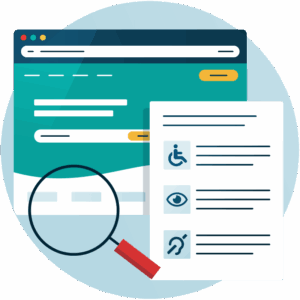
The following digital accessibility platforms are widely recognised for offering meaningful functionality beyond basic overlays or one-off scans.
1. Recite Me
Recite Me provides comprehensive support for both compliance and user experience. Core platform features include:
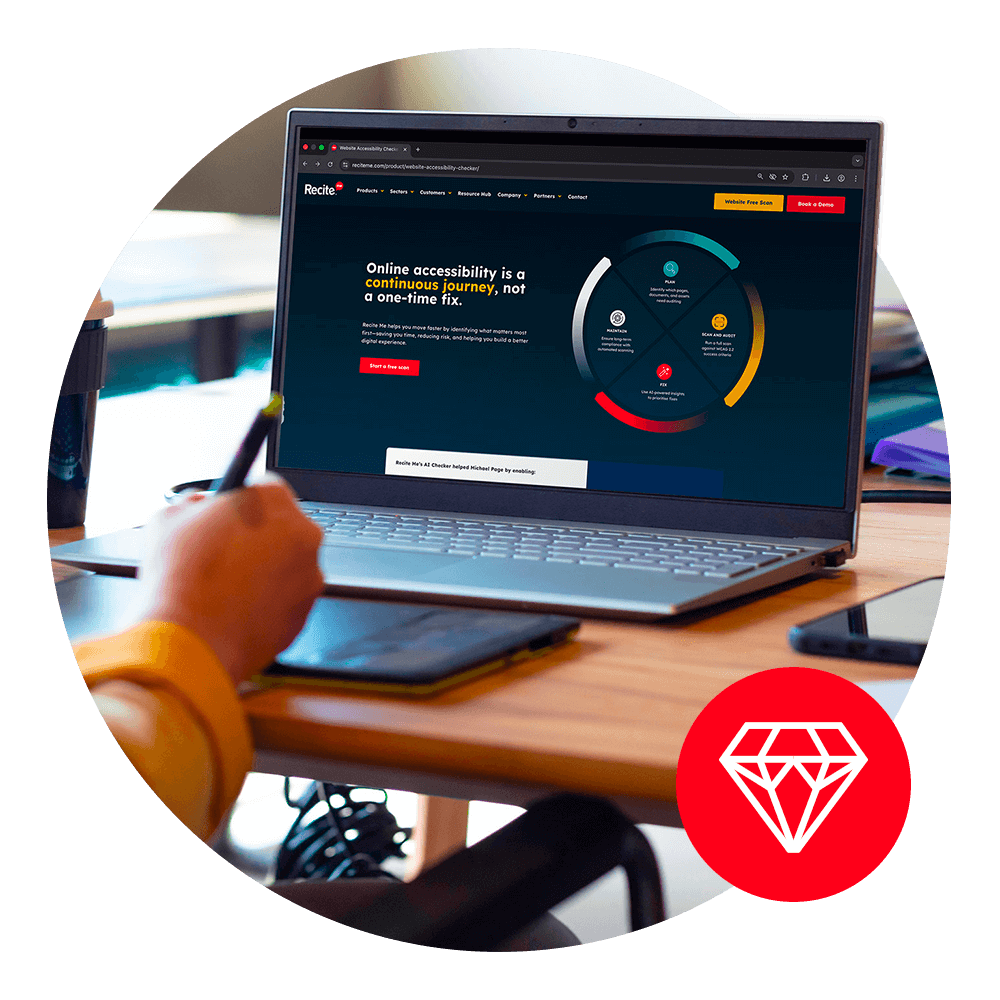
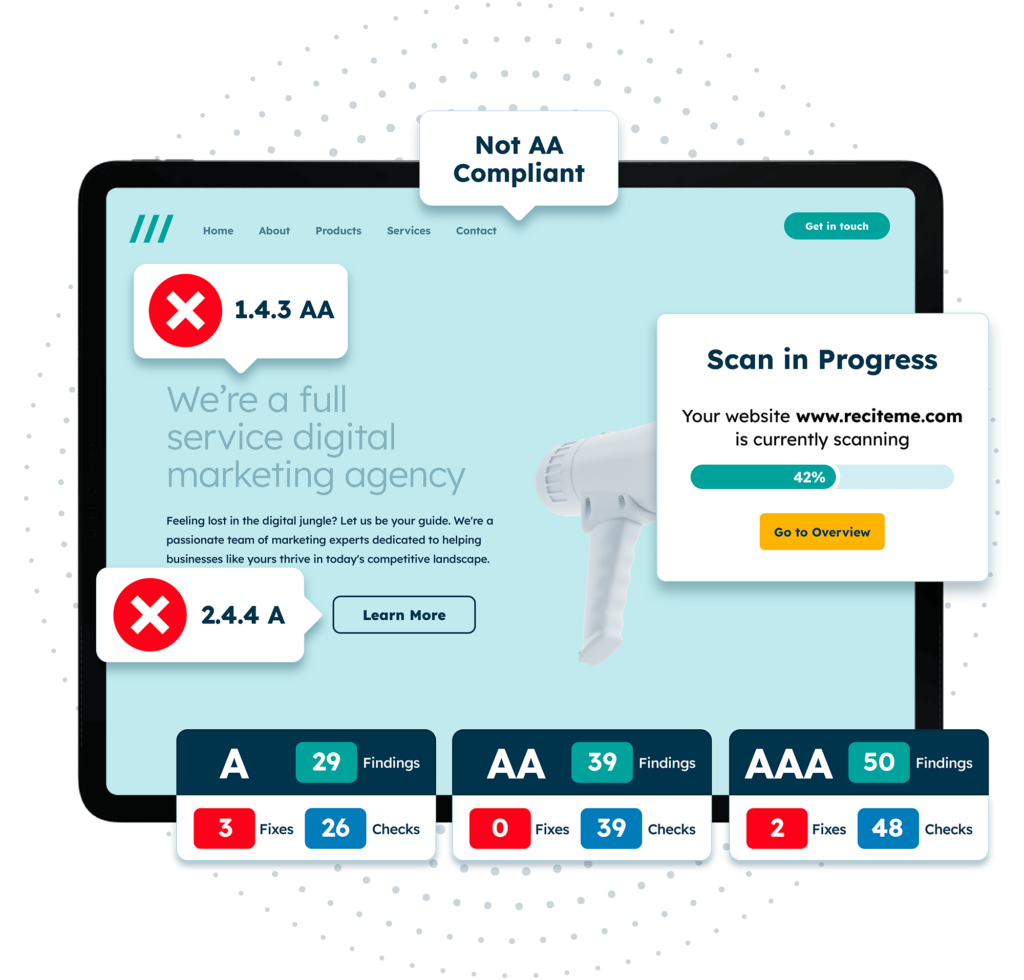
- Website Accessibility Checker: Provides automated scanning against WCAG 2.1 and WCAG 2.2 Level AA, delivering detailed reports with prioritised issues, clear remediation guidance, and ongoing monitoring to track accessibility improvements over time.
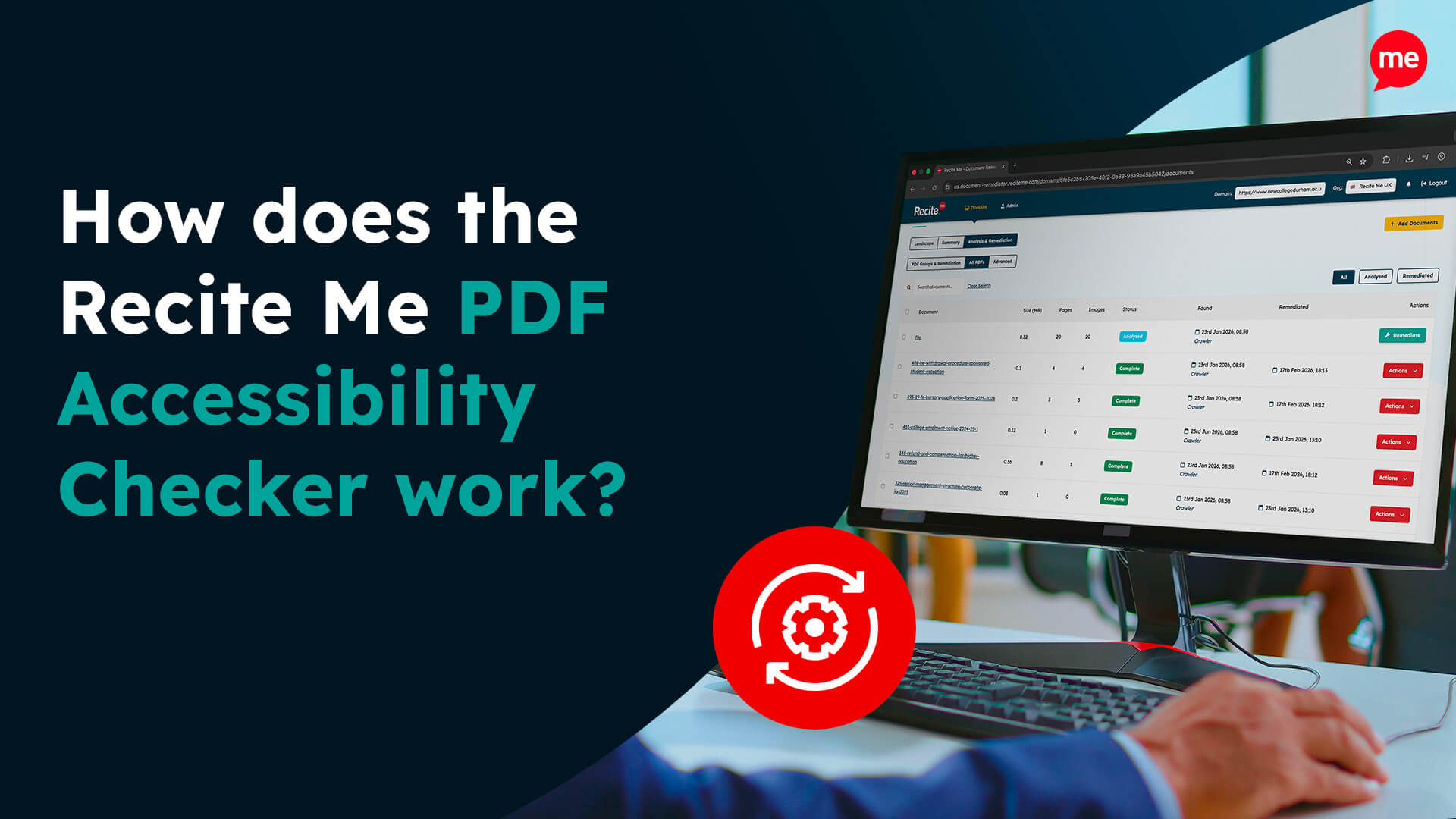
- PDF Accessibility Checker: Helps convert inaccessible documents into fully tagged, screen reader-compatible PDFs, ensuring downloadable content meets recognised accessibility standards.
- Assistive Toolbar: Offers text-to-speech functionality, real-time translation, font and colour customisation, reading aids, and more. It improves usability for all users, but is particularly beneficial for individuals with visual impairments, dyslexia, low literacy, and non-native English speakers.
These solutions enable Recite Me clients to reduce legal risk, demonstrate measurable compliance progress, and deliver a more inclusive digital experience without managing multiple disconnected tools.
Recite Me is the best digital accessibility platform for public sector bodies, housing associations, education providers, and enterprises that require both user-facing accessibility support and structured compliance monitoring.
2. DigitalA11Y
DigitalA11Y is best described as an accessibility knowledge and testing resource rather than a full digital accessibility platform. It provides:
- Detailed breakdowns of WCAG success criteria
- Implementation guidance
- Educational materials aimed at helping developers understand accessibility requirements at a technical level.

It can serve as a useful reference for teams building internal accessibility capability. However, DigitalA11Y does not provide automated site-wide scanning, remediation services, assistive user tools, monitoring dashboards, or governance support. As a result, additional tools would be required to manage compliance risk and support end users at scale.
3. WAVE by WebAIM
WAVE is one of the most widely recognised free accessibility testing tools. It operates primarily as a browser extension that visually highlights accessibility errors directly on a webpage. It is particularly effective for:
- Identifying common issues such as missing alternative text, empty links, colour contrast failures, and missing form labels.
- Overlaying icons onto live pages to help developers conduct quick checks during the build process.
- Providing immediate visual feedback that supports manual code review and learning
WAVE is designed for page-level diagnostics rather than structured accessibility management. While effective at identifying issues, it does not provide the monitoring, reporting, or remediation support required to manage compliance across larger digital estates.
4. Siteimprove
Siteimprove positions itself as a broader digital governance platform that includes accessibility monitoring as part of a wider quality assurance suite. Its accessibility module provides:
- Automated scanning
- Reporting dashboards
- Policy monitoring tools

The platform integrates with major CMS environments, making it attractive for enterprise digital teams managing complex estates. It is particularly suited to environments where accessibility is one component of a broader digital governance strategy, enabling central oversight across multiple domains from a single system.
5. Axe Platform by Deque
Deque Systems delivers enterprise accessibility solutions built around its widely used Axe testing engine. The Axe Platform integrates directly into development workflows, enabling automated testing within CI/CD pipelines and development environments. It provides:
- Automated testing
- Manual audit services
- Professional training through Deque University
The focus is on structured, code-level compliance management rather than UX or the provision of end-user assistive tools, making it better suited to developer-led environments where remediation is handled internally and accessibility is embedded into the engineering lifecycle.
Get a free automated accessibility check of your websites homepage. This will identify and highlight any compliance issues on your website. Followed by recommendations on how to implement the necessary changes to make your website more accessible.
What makes a good digital accessibility platform?
When evaluating digital accessibility platforms, decision-makers should consider the following factors.
- Coverage against recognised standards: At a minimum, platforms should test against WCAG 2.1 Level AA benchmarks. However, leading platforms are increasingly aligning with WCAG 2.2 success criteria. If a provider does not clearly reference specific WCAG conformance levels, that should raise concern.
- Automation combined with human oversight: Automated tools typically detect only 30–40% of WCAG issues. Strong platforms combine automated scanning with manual audit options, clear remediation guidance, and ongoing monitoring to provide a more defensible compliance position.
- UX support: For public-facing services in particular, it’s often worth considering platforms that offer assistive technology that immediately improves on-site usability. While these tools do not replace underlying code fixes, they can significantly enhance inclusion while remediation work progresses.
- Reporting and governance: If accessibility is a governance issue as much as a technical one, the best digital accessibility platform is likely one that offers centralised dashboards, audit trails, exportable reports, and support for accessibility statements.
- Scalability: Accessibility needs vary by scale. A small website may require lightweight testing tools, while larger organisations with multiple domains, PDF libraries, and third-party integrations need a more structured, enterprise-ready solution.
Ultimately, if accessibility cannot be measured, it cannot be managed. Therefore, the best platforms are those that provide measurable insights, support accountability, and produce evidence that demonstrates progress.
What standards do accessibility platforms check against?
The primary benchmark for digital accessibility is the Web Content Accessibility Guidelines (WCAG). Depending on the provider and geographical scope, accessibility platforms may also reference:
Each of these frameworks is largely underpinned by WCAG, reinforcing their status as the foundation against which accessibility is measured, audited, and enforced globally.
Do the best digital accessibility platforms make my website compliant?
No. Even the best digital accessibility platform cannot guarantee full legal compliance because ongoing conformance depends on:
- Content authors creating accessible material
- Developers implementing correct semantic structure
- Ongoing monitoring as content changes
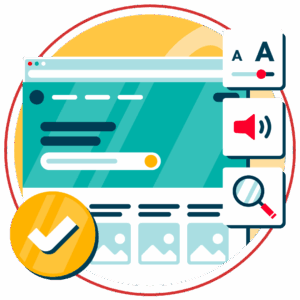
It is also important to distinguish between different types of accessibility solutions. Automated tools can detect common issues. Toolbars can enhance usability. PDF remediation services can fix document barriers. But true compliance is a continuous process, not something that can be checked off your organisational to-do list with the purchase of a single product.
Should organisations use accessibility platforms?
In most cases, yes. But they must be implemented strategically. A well-chosen digital accessibility platform can help you:
- Identify barriers early
- Tackle remediation to reduce legal and reputational risk
- Improve user experience
- Provide evidence of due diligence
- Embed accessibility into long-term digital governance
However, technology alone is not enough. Accessibility delivers the strongest results when platforms are supported by clear policies, trained teams, and leadership accountability. In other words, digital accessibility platforms should reinforce internal accessibility culture and governance frameworks, not attempt to replace them.
What are the most common accessibility issues detected?
Across public and private sector websites of all sizes, the same access barriers appear repeatedly. Common examples include:
- Missing or incorrect alternative text
- Insufficient colour contrast
- Empty or vague link text
- Missing form labels
- Incorrect heading structure
- Keyboard navigation failures
- ARIA misuse
- Inaccessible PDF documents
These issues are often preventable, yet without a comprehensive digital accessibility solution in place, they remain widespread due to a lack of structured monitoring.
Do the top digital accessibility platforms offer free tools?
Most leading digital accessibility platforms operate on a subscription basis, with core solutions positioned at enterprise level. That said, some providers, including Recite Me, also offer free resources to help organisations begin their accessibility journey and build internal awareness. These include:
- Accessibility checklists
- Educational guides
- Training webinars
- Colour contrast tools
- Introductory scans
Such tools support benchmarking, education, and early-stage improvements. However, where legal accountability and regulatory scrutiny apply, a more comprehensive accessibility framework is generally required.
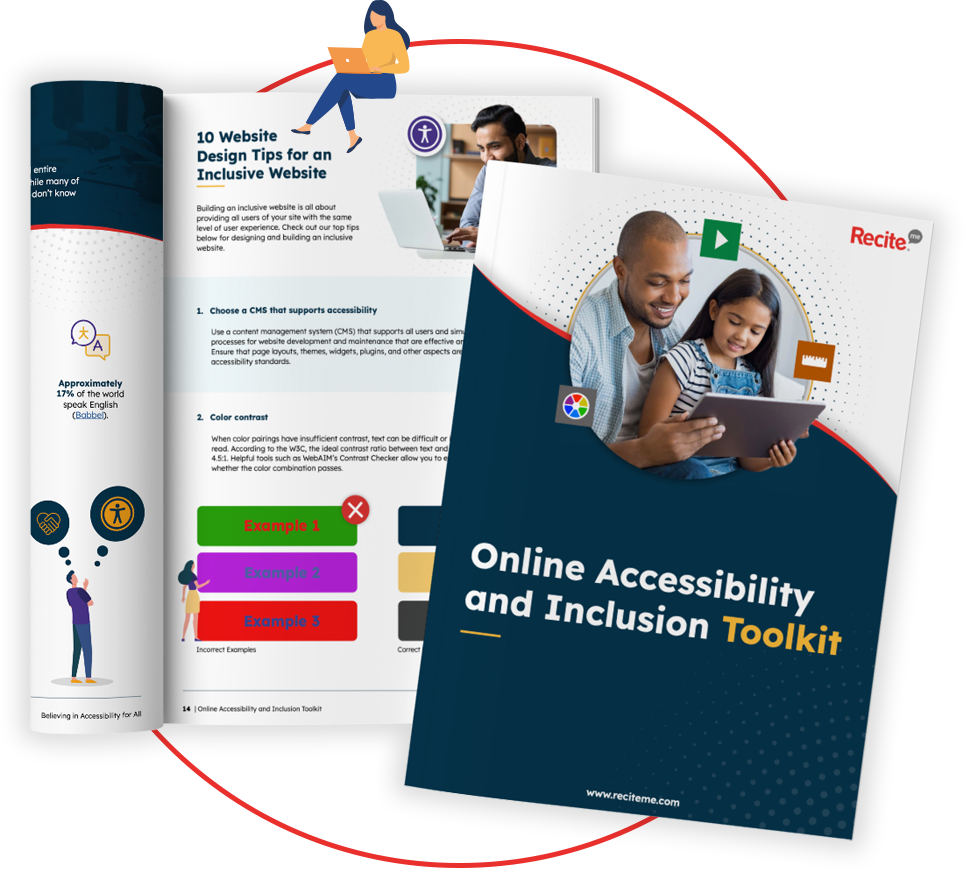
Our 40-page Digital Accessibility & Inclusion Toolkit helps businesses break down online barriers and make a real impact. It offers practical advice on all aspects of digital accessibility, from writing an accessibility statement to accessible website tips and inclusive hiring.
Choose your platform today and start managing accessibility with confidence
Accessibility is no longer a reactive exercise. Now is the time to ensure your approach delivers the structure and accountability required to manage compliance effectively.
Selecting the best digital accessibility platform involves weighing technical capability against risk exposure, governance obligations, and user experience priorities. The strongest solutions combine WCAG monitoring, structured reporting, and usability support to help organisations demonstrate measurable, defensible progress.
Need additional guidance to get started? Download your free accessibility scan today, or speak to our team for expert, tailored advice.
The best digital accessibility platforms FAQs
Looking for a recap or quick summary? Here are a few of our most frequently asked questions to help you get to grips with the essentials:
What is the difference between an accessibility platform and a widget?
A digital accessibility platform is a comprehensive solution that helps organisations monitor, manage, and demonstrate accessibility compliance over time. A widget is a front-end tool that improves on-site usability, such as text resizing or colour adjustments, but does not fix underlying code issues or provide compliance reporting.
What is the best digital accessibility platform?
There isn’t a single one-size-fits-all solution. Suitability varies depending on company size, regulatory exposure, and internal expertise. Public sector bodies and regulated industries typically require a comprehensive solution that combines WCAG monitoring, governance reporting, and user-facing accessibility support rather than standalone testing tools.
Can any digital accessibility platform guarantee WCAG compliance?
No. Even the best digital accessibility platform cannot guarantee full WCAG compliance. Automated tools can detect many issues, but manual testing, accessible content practices, and ongoing governance are also required to meet legal expectations.
Are free accessibility tools enough for legal compliance?
Not usually, no. Free tools are useful for benchmarking and early-stage improvements. However, organisations subject to stringent regulatory requirements generally require a more structured framework that includes ongoing monitoring and evidence of due diligence.
Do small businesses need to invest in a digital accessibility platform?
The specifics of what you need will depend on your risk level and growth plans. Smaller organisations may only require lightweight testing tools and guidance, whereas larger enterprises typically need structured monitoring, reporting dashboards, and remediation support.
How much does a digital accessibility platform cost?
Costs vary depending on website size, number of domains, services included, and level of support. Enterprise-grade platforms are typically subscription-based and priced according to complexity and risk exposure.
Check out our Products & Services
Ready to take your first steps towards digital accessibility compliance? Then see how we can support your journey with our accessibility solutions:
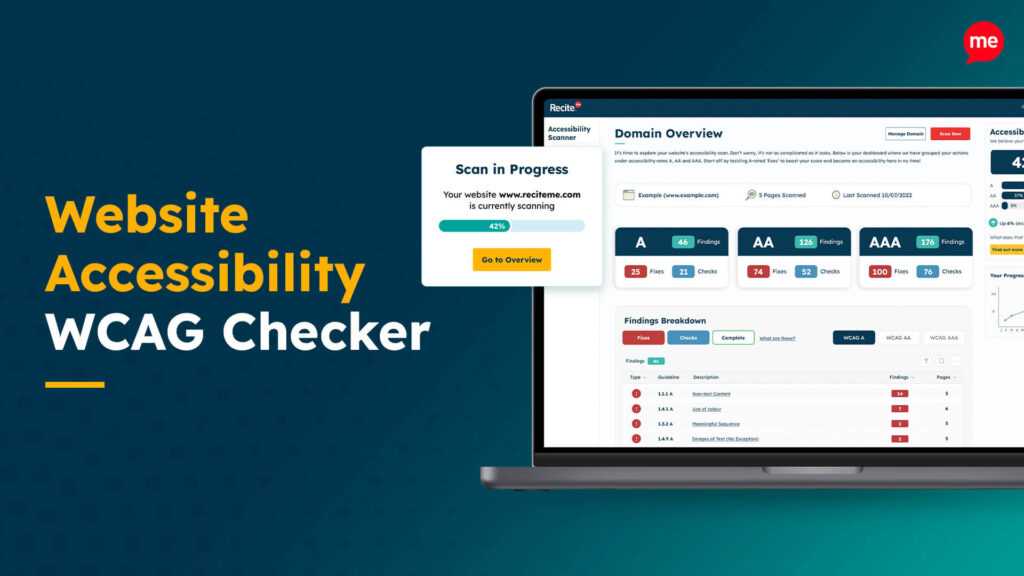
Web Accessibility Checker
Scan, detect, fix, and maintain accessibility compliance standards on your website.
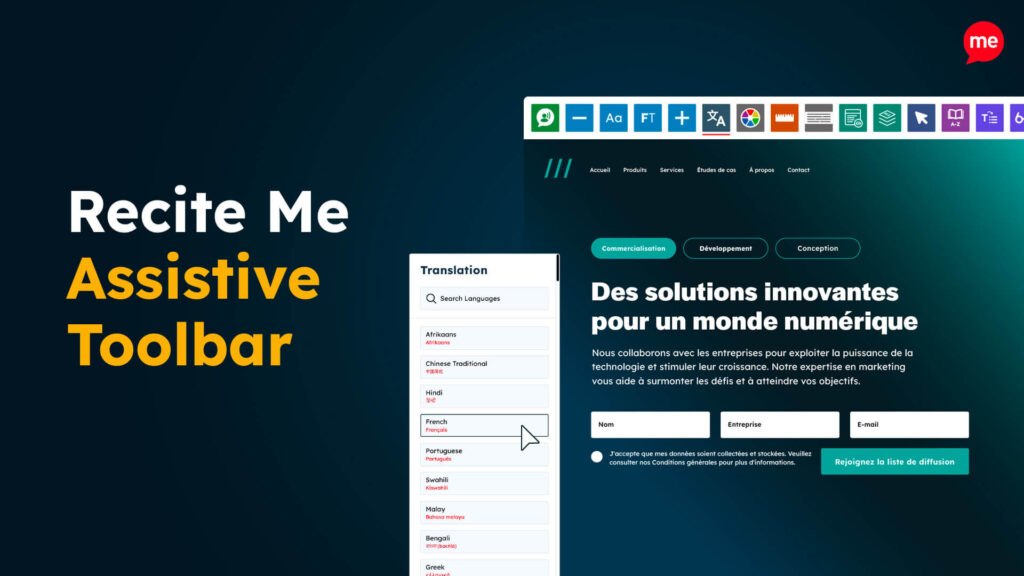
Assistive Toolbar
Make your website an inclusive and customisable experience for people with disabilities.
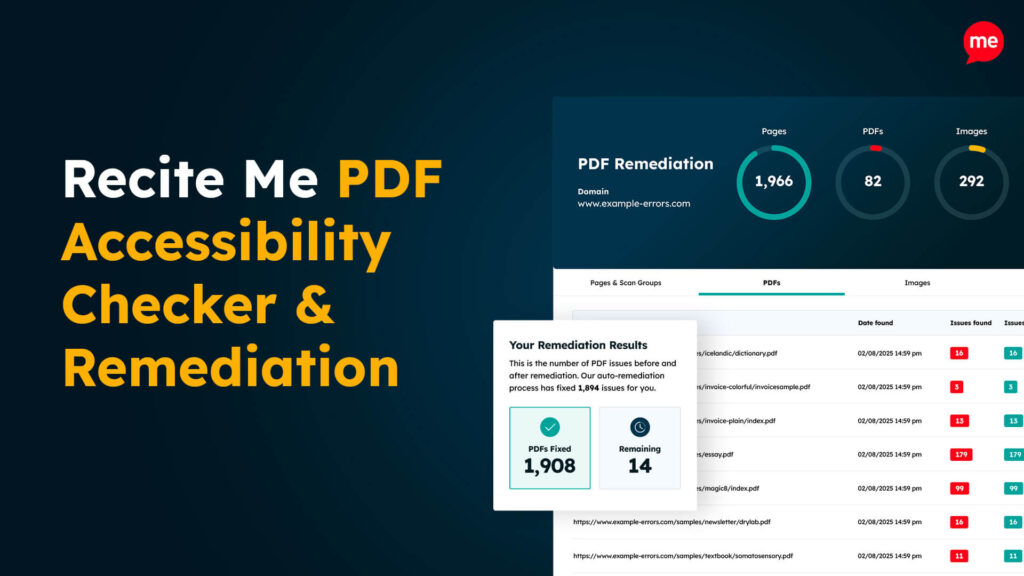
PDF Accessibility Checker
Check your PDFs are compliant with accessibility standards and run automated fixes.