Get A Free ADA Compliance Audit Of Your Website
Download NowCreating a workplace that is accessible and inclusive is not only a legal responsibility but also a meaningful way to support productivity and fairness across an organisation. The Americans with Disabilities Act (ADA) sets clear expectations for removing both physical and digital barriers so that everyone has equal access to employment, information, and services.
This blog looks at what ADA compliance means in practice, which organisations it applies to, common accessibility barriers, and the steps employers can take to create workplaces that work better for everyone.
What is the Americans with Disabilities Act (ADA)?
The Americans with Disabilities Act is a civil rights law enacted in 1990 that prohibits discrimination against people with disabilities in public life. This includes areas such as employment, public services, transportation, and access to online information and services. Essentially, ADA was established to ensure that individuals with disabilities have the same rights and opportunities as everyone else.
ADA was established before the rise of the internet and digital platforms. Nowadays, it involves ensuring that digital content and services are accessible to all, making it a key consideration for all organizations in today’s world. Digital accessibility is guided by the Web Content Accessibility Guidelines (WCAG), which define how content can be made accessible for people with disabilities.
What types of organizations need ADA-compliant workplaces?
ADA applies to many areas of public life, which means it is a consideration for all employers. However, certain organizations have specific accessibility obligations.
Private organizations with more than 15 employees
Any private organization with 15 or more employees must take steps to ensure that its workplace (both physical and digital) does not discriminate against those with disabilities. This involves making sure that digital platforms are usable and accessible for all, including websites, employee portals, internal systems, and documents.
US government agencies
Government agencies must also take steps to ensure people with disabilities can access their services, programmes, and digital content. All agencies must be aware of two key upcoming dates regarding ADA compliance:
- April 24, 2026: Compliance for agencies serving a population of more than 50,000.
- April 26, 2027: Compliance for agencies serving a population of less than 50,000.
Government agencies must ensure that all digital content and services are ADA-compliant by these dates to avoid legal issues and reputational risk.
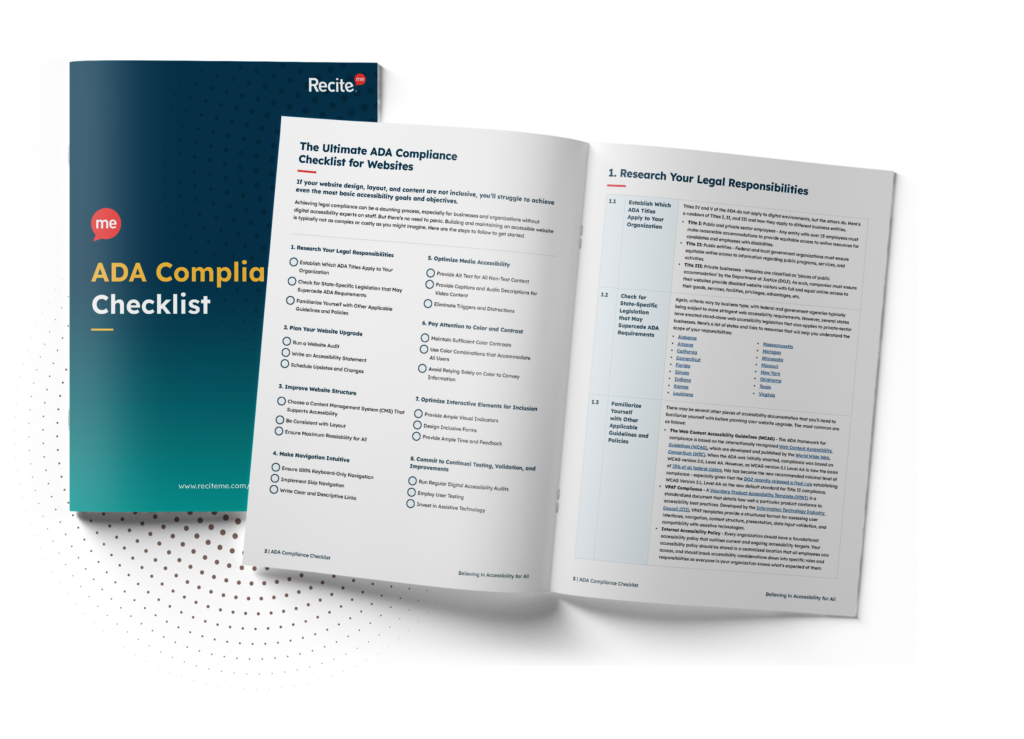
Want to make sure your website is compliant with the Americans with Disabilities Act? Then unlock the ADA compliance checklist now. Discover actionable steps to ensure ADA compliance, helping you avoid lawsuits and any other negative consequences of non-compliance.
The two main types of accessibility issues in the workspace
There are two areas organizations must consider in terms of ADA compliance, which include physical accessibility barriers and digital accessibility barriers. Here’s why:

Physical accessibility barriers
In the physical workplace, organizations may face several accessibility barriers. Common barriers include:
- Stairs without alternative access, such as ramps or lifts
- No elevators in multi-story buildings
- Bathrooms that are not wheelchair accessible
- Lack of signage
Addressing these barriers ensures that both employees and visitors with a wide range of disabilities can access buildings and facilities safely and independently.
Digital accessibility barriers
Digital accessibility should be an essential consideration for all organizations. Particularly with the rise of remote work, online services, and digital communication, there can be many digital barriers for those with disabilities.
These can include:
- Videos without captions
- Websites that require mouse-only navigation
- Documents without alt text or structural tags
- Content that is unreadable by screen readers
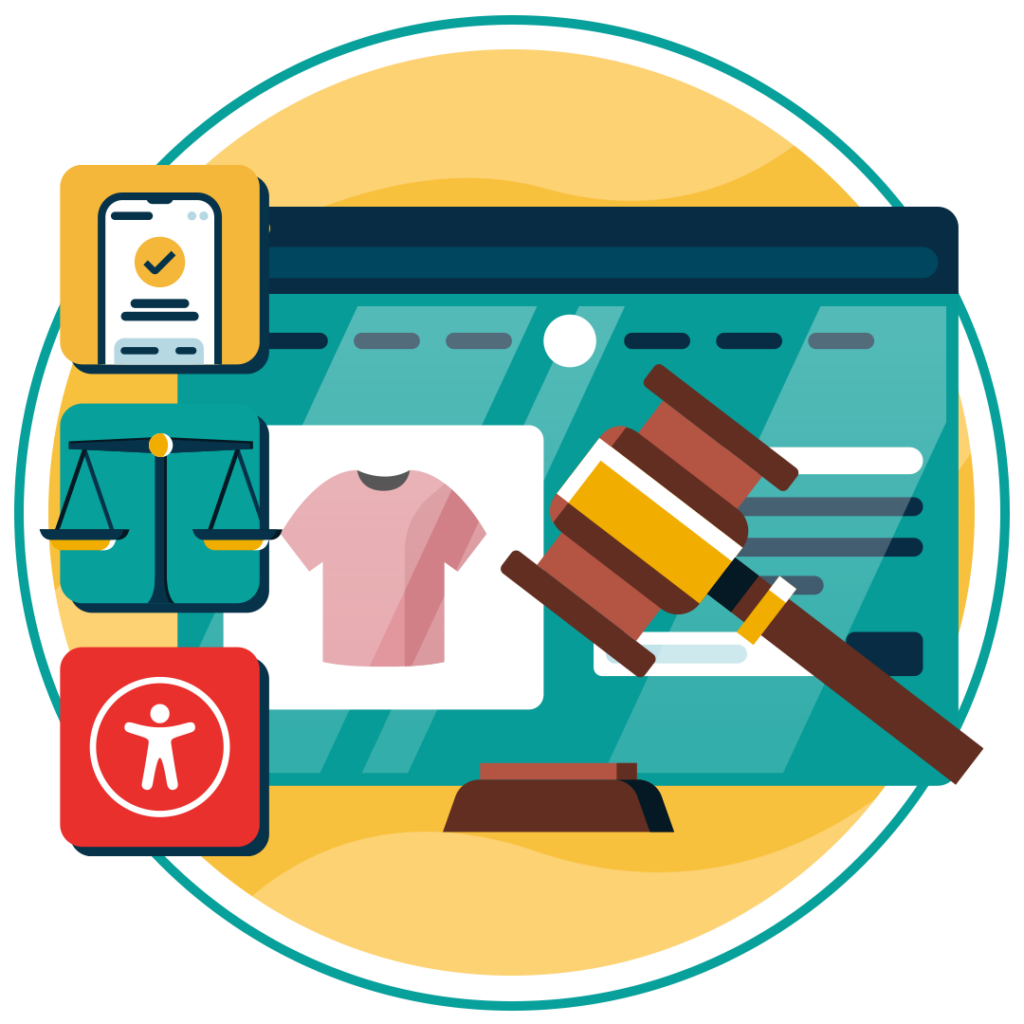
By addressing these digital barriers and adhering to WCAG standards, organizations can ensure that their websites and digital content are accessible to employees.
What are the most common ADA compliance violations for digital workspaces?
There are several common ADA compliance violations in digital workspaces that employers need to be aware of. In addition to non-compliance, these can prevent staff with disabilities from accessing essential information and completing tasks. Common violations include:
- Missing alt text: Without alt text, images cannot be described to visually impaired users by screen readers.
- Poor color contrast: Text that fails to meet color contrast requirements can make it difficult for visually impaired users to read online text.
- Uncaptioned videos: Videos without subtitles exclude users who are deaf or hard of hearing.
- Navigation issues: Websites and platforms that require mouse navigation can prevent keyboard users and those who use assistive tech from accessing and using online content.
How to make online workspaces ADA-compliant
ADA compliance can feel overwhelming at first, but there are a few practical steps that can put you on the pathway to compliance and accessibility for all users. We have two useful tools that will help you quickly identify compliance violations and fix these issues.
Run an ADA compliance scan of your website
First, you should run an ADA compliance scan of your website. Our Recite Me website accessibility checker quickly scans your entire website and highlights any non-compliance issues that you need to address.
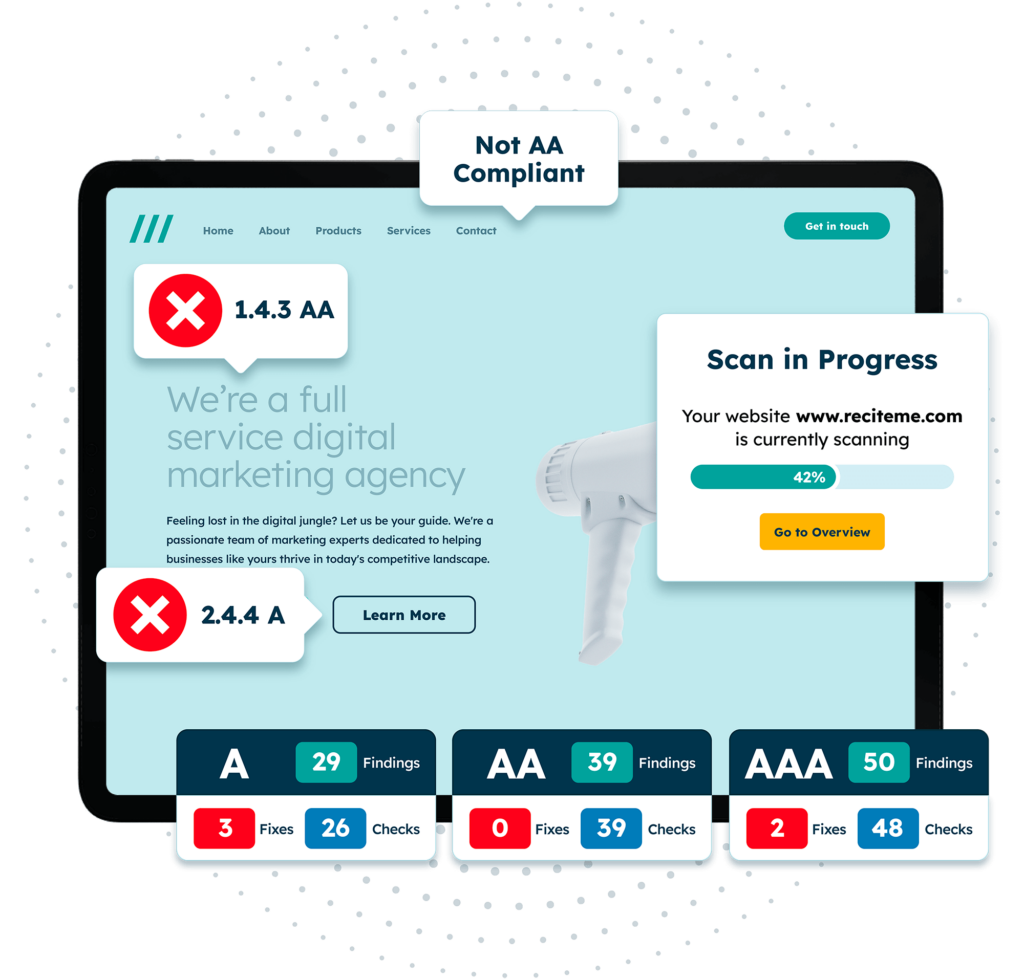
Furthermore, our website accessibility checker lets you make quick improvements to your website with AI-driven fixes, dev-ready code, and smart editing tools. In addition to helping you address non-compliance issues, this can reduce manual workload and ensure that all changes result in full compliance. You can try the product today by running a free accessibility scan of your website’s homepage.
Use our PDF Remediation tool to address file accessibility issues
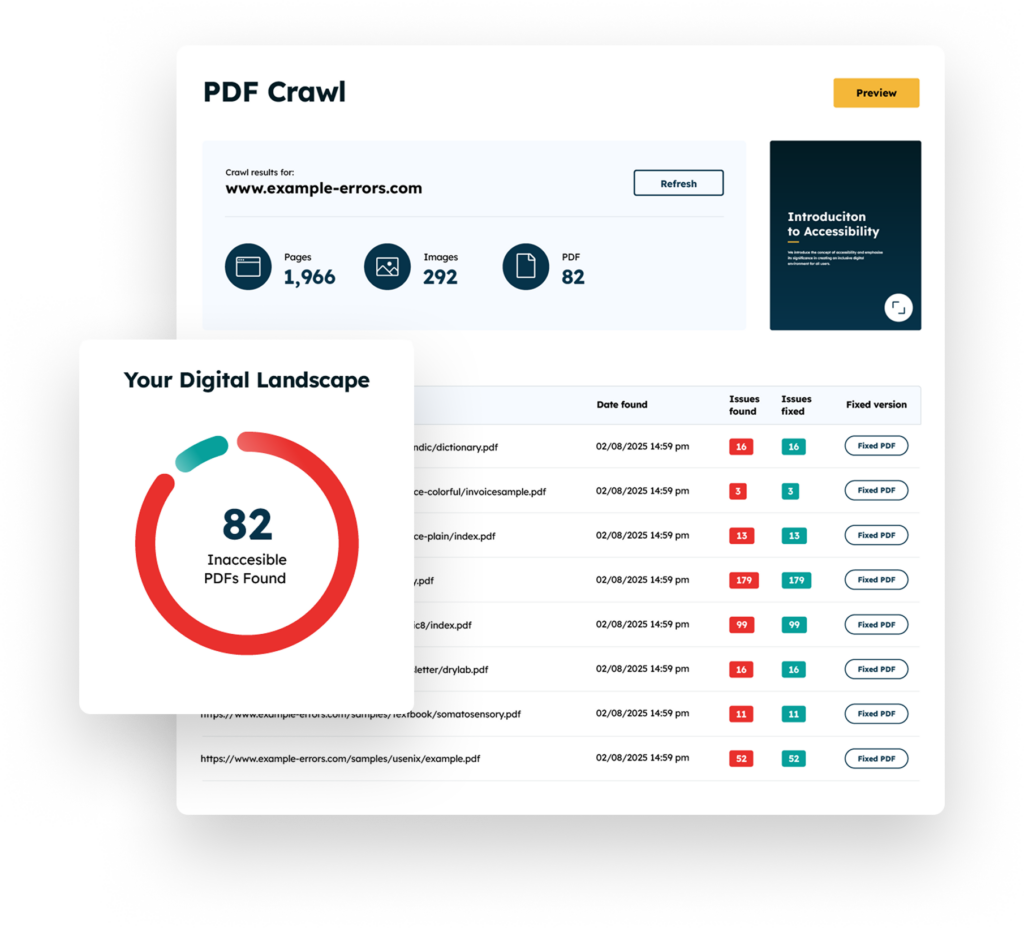
Another major area for concern for ADA compliance in the workplace is inaccessible PDFs. At Recite Me, we also offer a tool to help automate the process, by identifying violations and providing the necessary recommendations. This helps you identify issues such as unreadable text, improper tagging, and missing headings can prevent screen users and other assistive technologies from functioning properly.
The Recite Me PDF Accessibility Checker scans your entire site and runs all PDFs through WCAG compliance checks, highlighting any issues that need to be addressed. The Interactive Compliance Dashboard displays pass/fail status, document health, and next steps, enabling organizations to fix issues and ensure ongoing accessibility.
The benefits provided by ADA compliance in the workplace
ADA compliance is essential from a legal standpoint, but it also offers clear benefits for both organizations and their employees. These include:

Productivity Gains
ADA compliance ensures that the entire workforce can carry out their duties effectively and to a high level each day, regardless of ability. Addressing physical and digital barriers allows employees with a wide range of disabilities to contribute fully, improving both individual and overall business productivity.
Enhanced Job Satisfaction & Morale
Job satisfaction and employee morale both rise when an organization is ADA-compliant and has taken clear steps to ensure accessibility. Making workplaces physically and digitally accessible demonstrates that the employer prioritizes inclusivity, which can strengthen team unity and create a positive workplace atmosphere that benefits everyone.

Improved Reputation
Showing a commitment to accessibility can enhance brand reputation and public trust. In competitive sectors, businesses that prioritize inclusivity and diversity find it easier to attract new customers, employees, investors, and partners.
Create an ADA-friendly workspace through regular training
Regular training will keep ADA at the forefront of employees’ minds and ensure that everyone understands their responsibilities in maintaining ADA compliance. Training should involve teaching staff to create digital content that is accessible and ADA-compliant, and to address any barriers for users with disabilities.
The Recite Me ADA Accessibility Training course is free to download and guides users through key topics like web accessibility standards, assistive technologies, and creating inclusive digital experiences. This training course will help organizations improve accessibility standards and create a culture of inclusivity.
Get a free automated ADA compliance audit of your website. This audit will highlight compliance violations and provide the recommendations needed to meet ADA compliance standards.
Conclusion: Work toward ADA compliance today
The importance of ADA compliance in the workplace cannot be overstated. This is essential on both legal and practical grounds, as well as for creating a workplace that is accessible, inclusive, and positive for all employees. Organizations must address both physical and digital barriers to empower employees and create a culture of accessibility.
If you’re interested in taking the first steps towards an accessible workplace, we recommend running a free ADA compliance scan of your website’s homepage. You can also reach out to a member of our team for more guidance and support on how our tools can help drive positive change.
ADA compliance in the workplace FAQs
Looking for a recap or quick summary? Here are a few of our most frequently asked questions to help you get to grips with the essentials:
What are the risks of ADA non-compliance?
Risks of ADA non-compliance can include legal action, fines, and damaged public perception. Additionally, non-compliance can exclude staff with disabilities and damage daily productivity.
How are organizations found to be non-compliant with ADA standards?
There are several ways an organization can be found non-compliant. These include employee complaints, regulatory reviews, accessibility audits, and legal investigations. Digital assets are often tested against ADA and WCAG standards to identify issues that need to be addressed to avoid legal action.
How often should organizations review ADA compliance?
Accordion Content
Need more help becoming ADA compliant?
The following resources are packed full of actionable tips and expert advice for making your digital content compliant with the Americans with Disabilities Act:
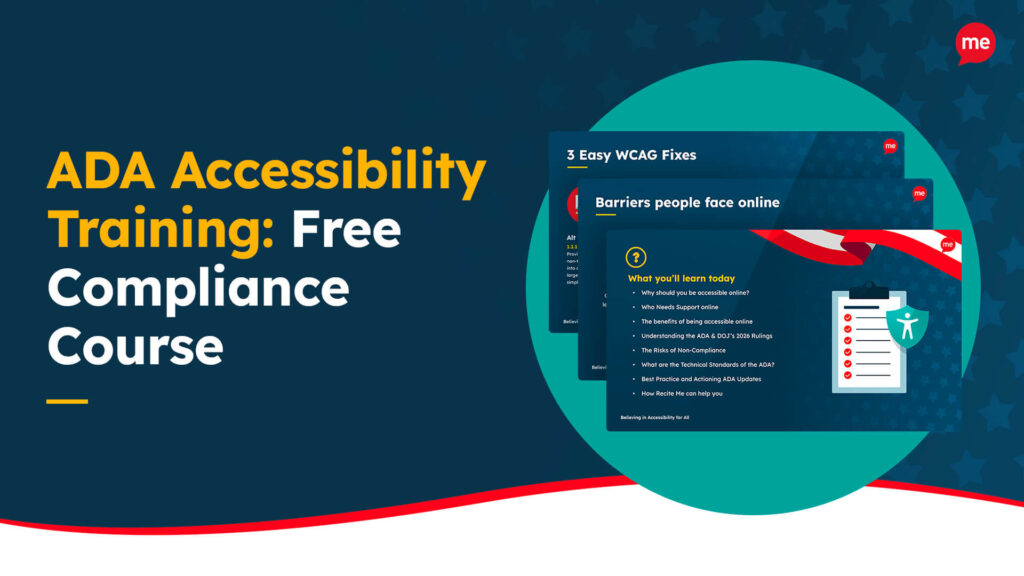
Free ADA Accessibility Training
Take the first step to ADA compliance by completing our training course.
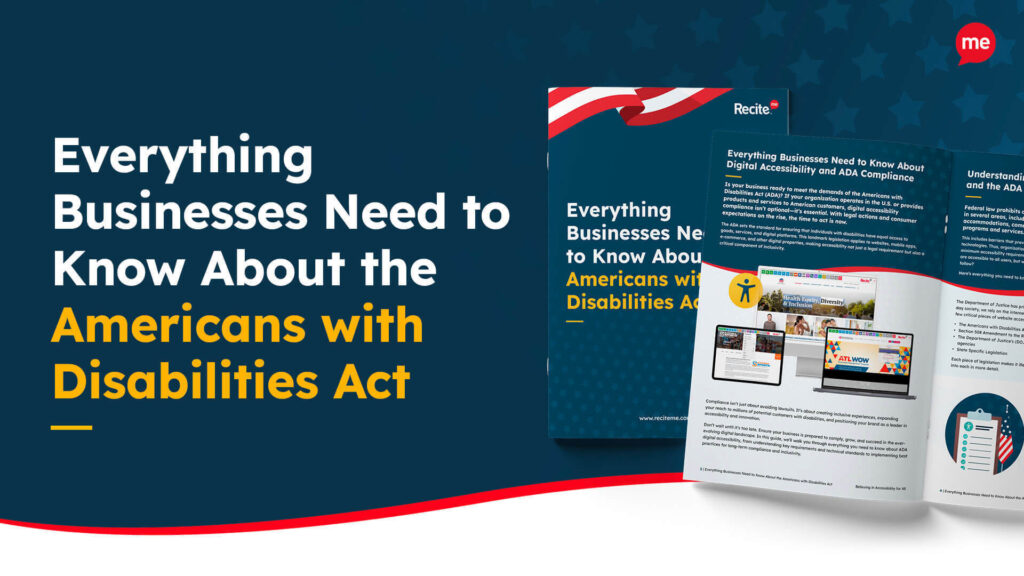
Free ADA Accessibility Guide
Ensure your organization is meeting the requirements for ADA compliance.