Get A Free ADA Compliance Audit Of Your Website
Download NowEvery San Diego business needs to be aware of and comply with the Americans with Disabilities Act (ADA), a federal law established in 1990 to protect people with disabilities from discrimination. This means businesses of all sizes and in all industries must take steps to ensure compliance to prevent legal issues, penalties, and reputational damage.
San Diego is a thriving business city with a large population, which means accessibility must be a top priority both in terms of ADA compliance and practical requirements. By understanding how ADA compliance works in San Diego, organizations can take steps to reduce legal risk and implement equal opportunities.
What is the Americans With Disabilities Act (ADA)?
The Americans with Disabilities Act is a federal accessibility law designed to prohibit discrimination on the basis of disability. This ensures that individuals with disabilities have equal opportunities in all areas of life, including employment, access to services, and the ability to participate in local and state government programs.
In the US, statistics show that more than 1 in 4 adults has a disability. According to ADA, a person with a disability is someone who:
- Has a physical or mental impairment that substantially limits one or more major life activities,
- Has a history or record of such an impairment (such as cancer that is in remission), or
- Is perceived by others as having such an impairment (such as a person who has scars from a severe burn).

The ADA outlines requirements for employers, state and local governments, transport providers, commercial facilities, and telecommunication companies to prevent discrimination against people with disabilities.
Government agencies must be compliant by the deadline
Government agencies in the US need to be aware of two deadlines in terms of ADA compliance set by the Department of Justice (DoJ). Agencies must ensure that their services, programmes, and digital content are equally accessible by these deadlines to prevent legal action.

These deadlines are as follows:
- April 24th, 2026: Agencies serving a population of more than 50,000.
- April 26th, 2027: Agencies serving a population of less than 50,000.
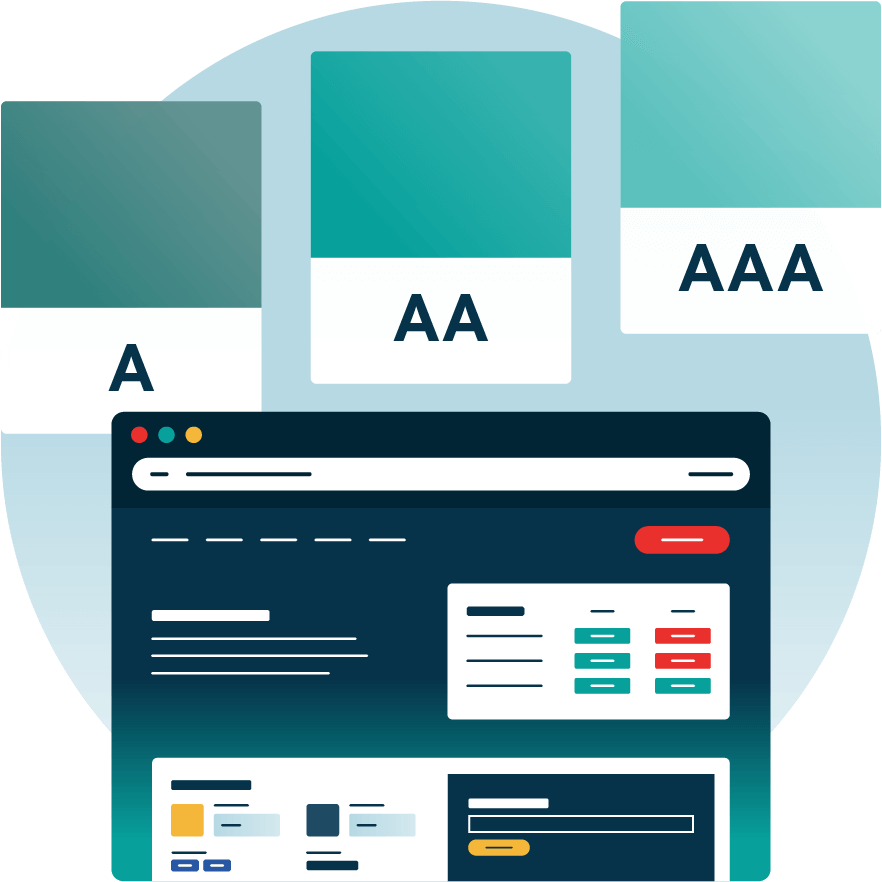
For government agencies in San Diego and elsewhere, this means taking steps to ensure online services conform to Web Content Accessibility Guidelines (WCAG) 2.1 at level AA. This is widely considered to be the gold standard for ADA compliance.
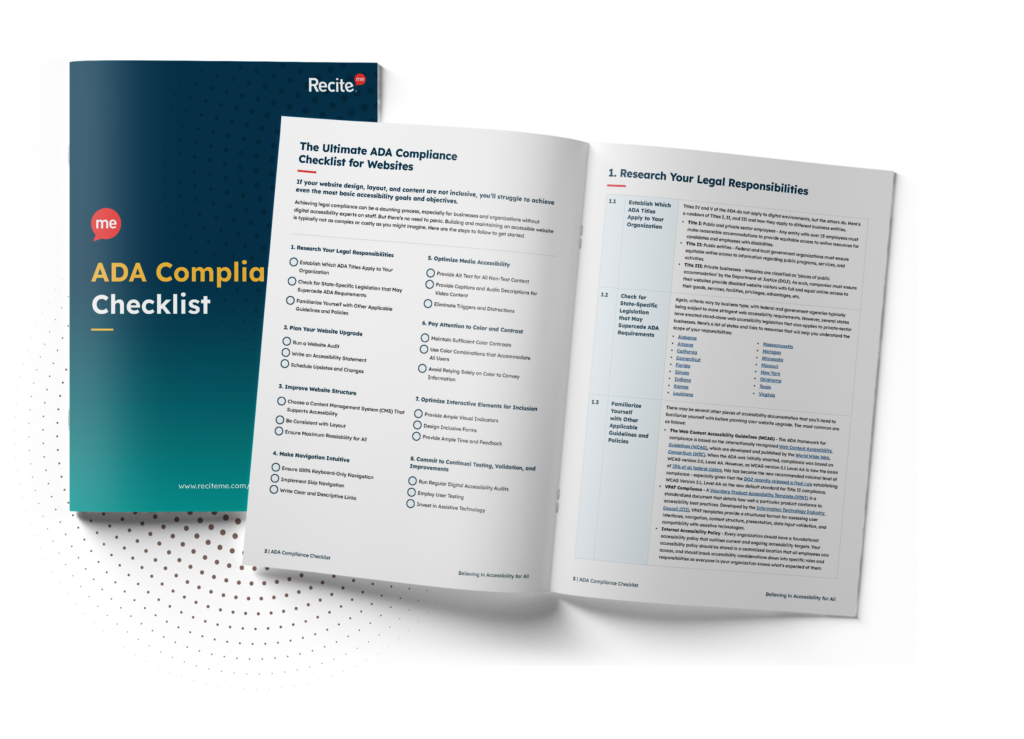
Want to make sure your website is compliant with the Americans with Disabilities Act? Then unlock the ADA compliance checklist now. Discover actionable steps to ensure ADA compliance, helping you avoid lawsuits and any other negative consequences of non-compliance.
Private companies in San Diego still need to achieve ADA compliance
It is not just government agencies that need to achieve ADA compliance. Private companies in San Diego must also take steps to remove barriers to ensure accessibility for all.

For businesses with 15+ employees, this means equal opportunities regarding hiring, workplace practices, and training in accordance with Title I employment provisions. Additionally, companies that qualify as “places of public accommodation” are required to make sure that customers with disabilities can access goods and services (both online and offline).
The most common ADA website compliance issues and how to fix them
ADA website compliance is an essential consideration for all modern businesses. It is vital that steps are taken to make websites accessible for those with a wide range of disabilities so that they can access information, complete purchases, fill in forms, and interact with services.
There are a few common ADA website compliance issues that can lead to lawsuits and exclude potential customers. These include:
Color contrast
One of the most common compliance issues is low color contrast between website text and the background. This can make it hard or impossible for users with visual impairments or color blindness to read content. To ensure compliance, implement a minimum contrast of 4.5:1 for normal text and 3:1 for large text.

Descriptive image alt text
Visually impaired users often use screen readers to understand a website. In order for this to be effective, websites must include descriptive image alt text that will enable the screen reader to describe any images to the user. Be sure to include a description of the image and the purpose for all essential images.
Ineffective keyboard navigation
You must also take steps to make sure that your website can be navigated with a keyboard. Many users are unable to use a mouse, so keyboard accessibility must be a priority. This involves making all interactive elements accessible with the Tab and Shift+Tab keys.


No captions or transcripts for multimedia content
These days, it is common for businesses to have videos and/or audio content on their websites. Users who are deaf or hard of hearing must not be excluded from this content, which is why compliance involves providing accurate captions for video content and full transcripts for audio content.
Improper heading structure
Improper heading structures are another common mistake where headings skip levels, which can confuse screen readers. This is why all web pages should use headings in a logical order, such as h1>h2>h3. This also keeps content in a clear, organized format.

How running an ADA compliance audit of your website can help detect issues
It can be hard to know where to begin with ADA website compliance, especially as many issues are not immediately obvious.

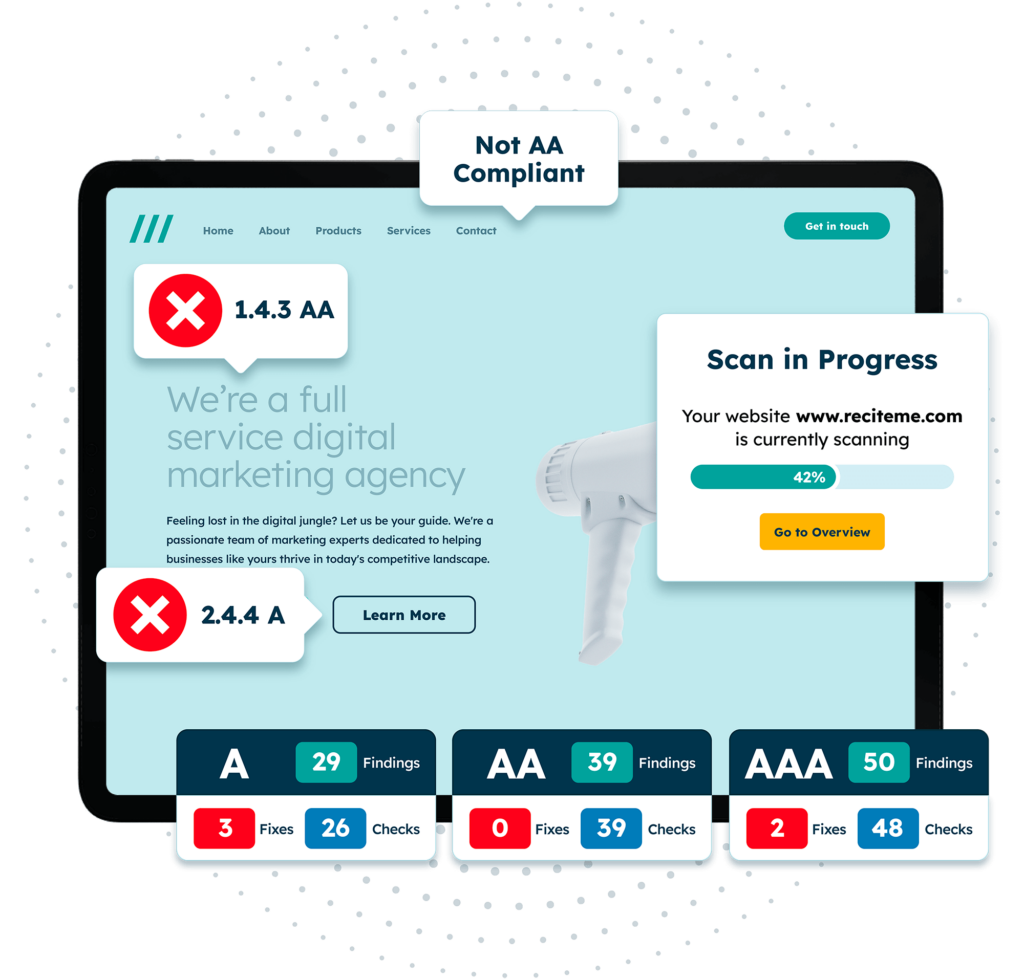
Instead of manually checking each page yourself (and risking oversights), consider using a website accessibility checker to scan your entire website for non-compliance issues. This is an automated audit that will detect accessibility issues, including the violations mentioned above and others. Once the scan is complete and any issues have been detected, you will receive a prioritized list with guidance on how to resolve the issues.
Crucially, you must also conduct manual checks as part of your website audit. This is because automated tools may not detect all ADA compliance violations. Use an ADA audit checklist to ensure ongoing compliance. Additionally, it is smart to conduct regular ADA compliance audits of your website, particularly if you often add new content or features.
PDFs need to be ADA-compliant too
It is also common for organizations to use PDFs to communicate important information, particularly government agencies. These documents must also be ADA compliant, but are often overlooked and have non-compliance issues such as missing tags, incorrect reading order, and contrast errors. These issues can prevent screen readers from communicating the essential information to those with visual impairments.
The Recite Me PDF Remediation tool can scan all PDF documents across your website and identify non-compliance issues that need to be addressed. The tool is also capable of automating many required fixes, helping to streamline and reduce manual workload. For any non-compliance issues that cannot be solved automatically, step-by-step guidance is provided, allowing you to take swift and effective action.

How ADA compliance in San Diego protects your business
Businesses in San Diego need to recognize the wide-ranging benefits of ADA compliance and how it can protect their company from several issues.
- Avoid lawsuits – ADA compliance is a legal requirement, meaning non-compliance can lead to costly lawsuits, federal investigations, and enforcement from the DoJ.
- Protect your brand image – ADA compliance demonstrates that your business prioritizes inclusivity – this is particularly important in a large and diverse city like San Diego. This can help build public trust and attract new customers.
- Reach more customers – As established before, 1 in 4 adults in the US has a disability. San Diego has approximately 1.4 million residents, which means non-compliance can exclude many potential customers.
- Prevent regulatory scrutiny – Regulatory investigations can be stressful and disruptive to daily operations. Ongoing ADA compliance and maintaining a strong paper trail of audits, remediation, and staff training can streamline investigations and reduce the likelihood of DoJ enforcement actions.
Get a free automated ADA compliance audit of your website. This audit will highlight compliance violations and provide the recommendations needed to meet ADA compliance standards.
Work towards ADA compliance in San Diego before it’s too late
ADA compliance must be a top priority for every business and government agency in San Diego in 2026. This is essential from a legal standpoint, but also to make your organization inclusive and accessible to all. ADA compliance involves removing physical and digital barriers so that individuals with disabilities have equal access.
If you would like to take the first step to compliance, we recommend running a free ADA compliance scan of your website. You can also check out our PDF remediation tool to ensure your documents are accessible and compliant, or contact our team for tailored support.
ADA Compliance in San Diego FAQs
Looking for a recap or quick summary? Here are a few of our most frequently asked questions to help you get to grips with the essentials:
What is the difference between ADA and WCAG?
ADA is a federal civil rights law, while WCAG are technical standards that can help organizations improve website accessibility and comply with ADA. WCAG 2.1 Level AA is considered the benchmark for digital accessibility.
What are the penalties for ADA non-compliance?
For first violations, maximum penalties can range from $55,000 to $75,000. For subsequent violations, there are penalties of up to $150,000. Additional fines are possible in California due to the Unruh Civil Rights Act, which allows plaintiffs to claim damages of up to $4,000 per violation. Settlements can also cost organizations huge sums in legal fees and remediation expenses.
Do mobile apps also need to be ADA-compliant?
Yes, all digital platforms offered by organizations must be ADA-compliant.
How often should websites be audited for ADA compliance?
It is smart to audit your website at least annually and after any major updates and/or the launch of new services.
Need more help becoming ADA compliant?
The following resources are packed full of actionable tips and expert advice for making your digital content compliant with the Americans with Disabilities Act:
Free ADA Accessibility Training
Take the first step to ADA compliance by completing our training course.
Free ADA Accessibility Guide
Ensure your organization is meeting the requirements for ADA compliance.