Get A Free ADA Compliance Audit Of Your Website
Download NowLos Angeles is one of the biggest cities in the US, with a population of approximately 3.88 million residents. With 1 in 4 adult Americans having some kind of disability, every organization needs to understand the importance of accessibility and compliance with the Americans with Disabilities Act (ADA).
ADA is a federal accessibility law that prohibits discrimination against individuals with disabilities and ensures they have equal opportunities. For organizations, this means removing physical and digital barriers so that those with disabilities have equal access to goods, services, and government programs.
Does every business in Los Angeles need to be ADA-compliant?
The Americans with Disabilities Act is a law that applies to all businesses nationwide, including those based in Los Angeles. Different types of organizations have different requirements outlined by different titles. For instance, Title I applies to businesses with 15 or more employees and requires employers to provide equal employment-related opportunities to those with disabilities, including hiring, training, and promotions.
Types of ADA compliance requirements
ADA compliance in LA involves the removal of barriers from both physical and online environments to improve accessibility.
Accessibility adjustments for physical environments
For business premises and facilities, ADA compliance involves making sure that those with disabilities can safely access physical environments. This often involves adjustments such as installing wheelchair ramps, lifts between different floors, and wheelchair accessible restrooms.
Businesses must remove barriers where it is readily achievable, meaning that changes are required without significant difficulty or expense. This means that businesses operating in older properties will not have to make huge, costly structural changes.
Digital accessibility for online environments
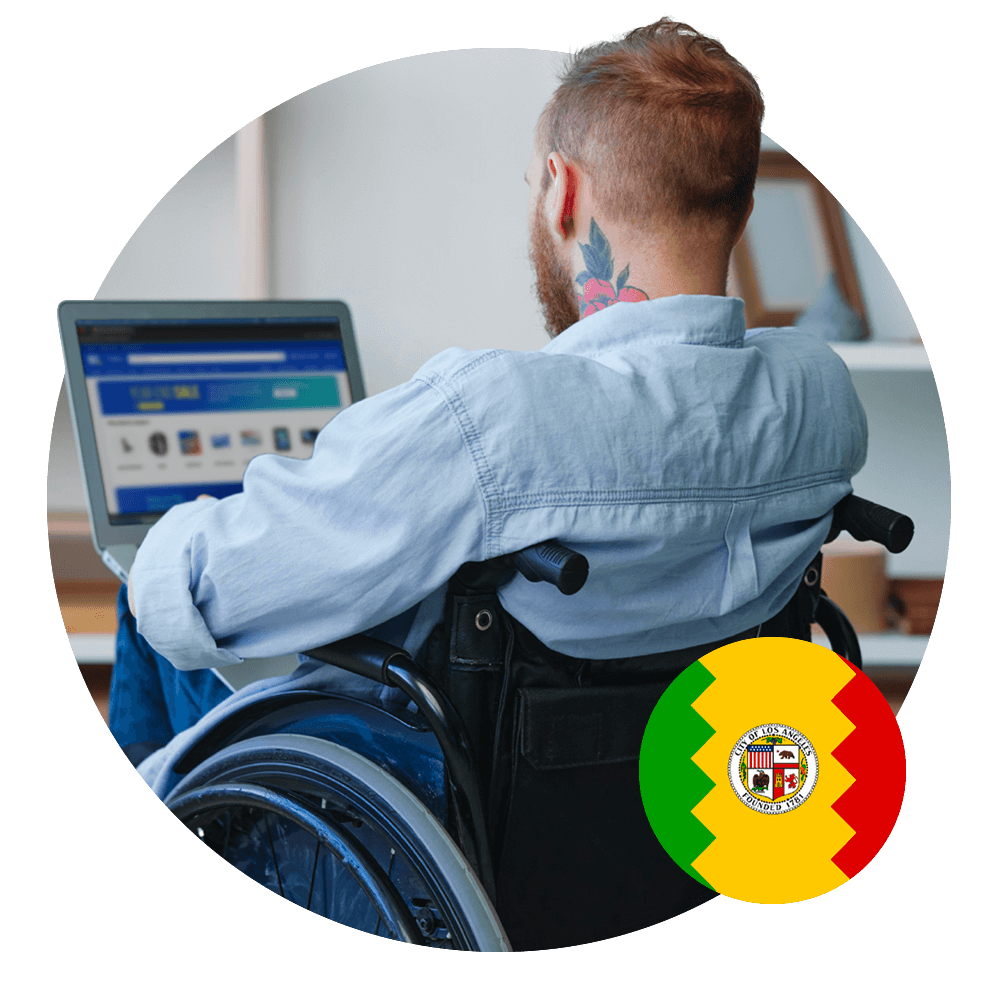
Digital accessibility has become a key area of focus in terms of ADA-related complaints in recent years. Many Los Angeles-based businesses offer websites, mobile apps, and digital platforms, so these must also be accessible for those with disabilities.
The Web Content Accessibility Guidelines (WCAG) 2.1 Level AA provide guidance on making sure that all digital content is accessible for users with a range of disabilities. This is generally considered to be the gold standard for compliance for digital accessibility, so LA-based businesses should rely on WCAG 2.1 Level AA to reduce legal risk while ensuring that their digital content is usable by all, including those using assistive technologies.
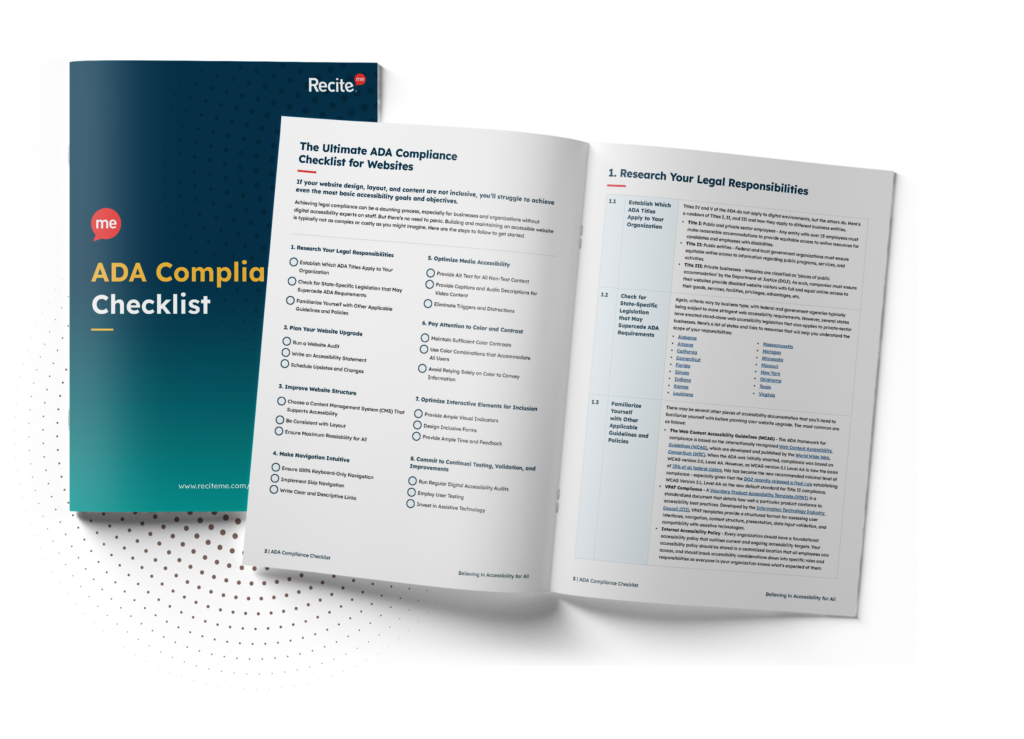
Want to make sure your website is compliant with the Americans with Disabilities Act? Then unlock the ADA compliance checklist now. Discover actionable steps to ensure ADA compliance, helping you avoid lawsuits and any other negative consequences of non-compliance.
The top five most common digital ADA compliance violations
ADA lawsuits in Los Angeles often stem from the same recurring accessibility issues. These include:
1. Poor color contrast
High color contrast is key to ensuring that digital content is easier to read for those with visual impairments or color blindness, but this is often overlooked when it comes to web design, with a focus on aesthetics.
How to fix it:
- Implement a minimum contrast ratio of 4.5:1 for normal text and 3:1 for large text
- Test pages and elements with a color contrast checker
2. Missing or inadequate alt text for images
Missing or inadequate alt text for images prevents screen readers from communicating content to users with a visual impairment, which can make it hard for them to understand the website content.
How to fix it:
- Add descriptive alt text to all informative images
- Use empty alt=”” for any decorative images (screen readers will then skip these)
3. Missing or poorly labelled form inputs
Many digital platforms have website forms for users to complete, so it is important that these are accessible for all users. A common ADA compliance violation is missing or poorly labelled form inputs, which can prevent those using assistive technologies from completing forms.
How to fix it:
- Make sure every form field has a descriptive label
- Provide accessible error messages
- Do not use placeholder text as a substitute
4. Lack of keyboard accessibility
Many users are unable to use a mouse for website navigation, so you need to make sure that they can use a keyboard to get around the site. If elements of the website are inaccessible via keyboard, many users are excluded.
How to fix it:
- Make sure all interactive elements can be accessed with the Tab and Shift+Tab keys
- Do not use custom controls that break standard keyboard functionality
5. Poor semantic structure and reliance on visual indicators
Screen readers can have difficulty understanding a website with poor semantic structure and reliance on visual indicators.
How to fix it:
- Use headings in a logical order, such as H1 > H2 > H3
- Do not use headings for stylistic purposes
Run an ADA compliance scan of your website to detect errors
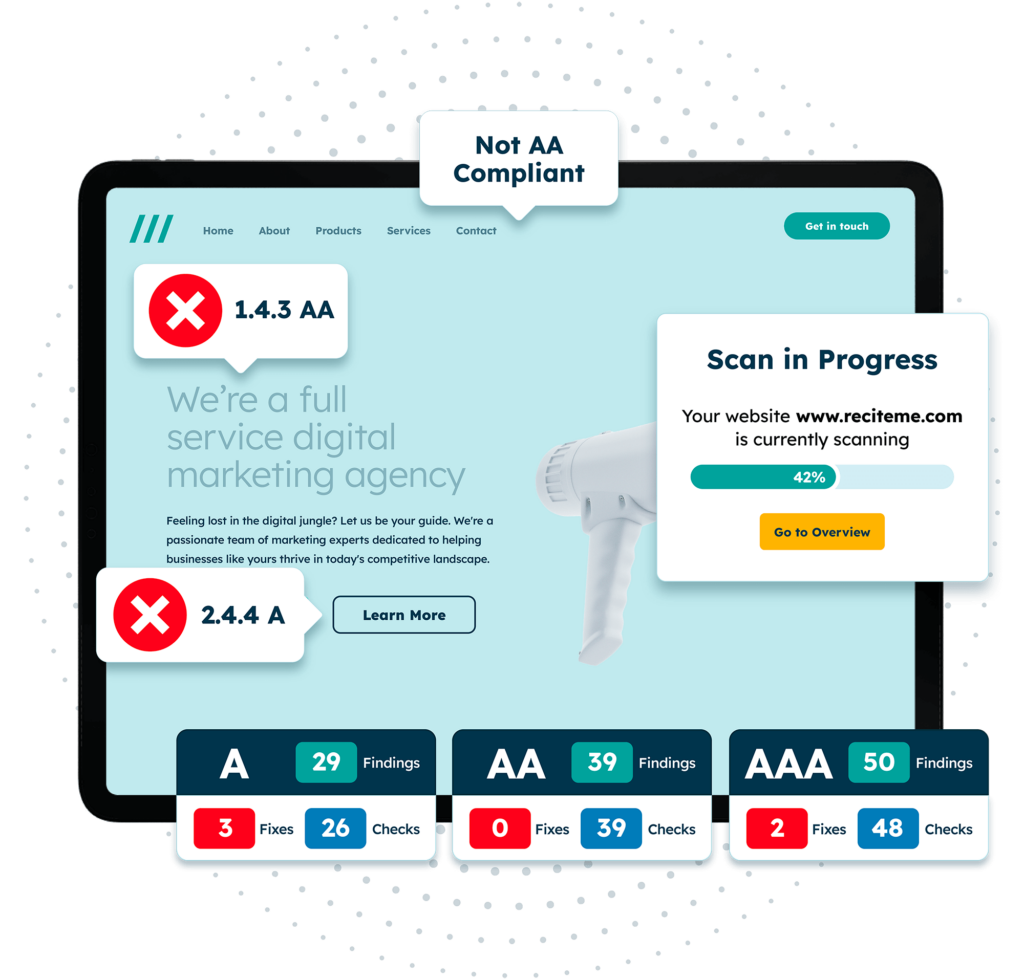
Fortunately, you do not have to spend hours on end manually checking every web page for errors. An ADA compliance scan can quickly analyze your website and highlight any issues that need to be addressed.
The Recite Me Website Accessibility Checker is an effective tool that can help organizations address accessibility issues in line with WCAG 2.1 Level AA standards. Once the scan is complete, you will get an accessibility score and easy-to-follow steps on remediation, making it quick and easy to address issues such as low color contrast, missing alt text descriptions, and structural problems.
Tools like this also make ongoing compliance efforts easier as you can perform regular scans, which is particularly important after any content updates or the introduction of new online services.
Digital files and PDFs must also be made accessible
It is not just your website that you need to make ADA-compliant. Many organizations create digital files and PDFs, so you need to make sure that these are accessible to all users. A few common issues found in documents like PDFs include missing tags, contrast errors, and incorrect reading order.
The Recite Me PDF Accessibility Checker is another tool that can simplify digital accessibility for LA-based organizations. This tool can scan your entire website to identify PDFs and other digital files, which are then put through WCAG compliance checks. Many required fixes can be automated, reducing the need for manual work. For any other highlighted issues, the tool will provide step-by-step instructions to help you resolve the issue.
How ADA compliance in L.A. can prevent lawsuits & regulatory scrutiny
The city of Los Angeles operates within a state that is widely known for its active disability rights enforcement. Every organization should prioritize ADA compliance in order to prevent avoidable lawsuits and the subsequent fallout. ADA lawsuits can lead to significant financial losses in terms of penalties, legal fees, settlements, and website accessibility remediation efforts.
By adopting a proactive stance, organizations can ensure ongoing ADA compliance. This should be achieved through regular website audits, remediation efforts, and staff training. Additionally, be sure to document compliance efforts to minimize legal exposure and simplify any investigations.
Increase your reach, revenue, and brand image through ADA compliance
ADA compliance in Los Angeles is clearly important from a legal standpoint, but it can also offer business benefits. It means that you are not excluding potential customers, enabling you to increase your reach and maximize revenue opportunities. With a quarter of the nation having a disability, failure to remove accessibility barriers naturally reduces your pool of customers.
Additionally, in cities like Los Angeles, where inclusivity and equal opportunities are a core part of the cultural identity, ADA compliance can help brands develop a positive brand image. This is critical to success in a competitive marketplace like L.A.
Get a free automated ADA compliance audit of your website. This audit will highlight compliance violations and provide the recommendations needed to meet ADA compliance standards.
Make sure your brand meets digital ADA compliance standards in LA
The city of Los Angeles is home to businesses of all sizes and in all industries. ADA compliance must be a priority for all in 2026, and not just in terms of legal obligation. Following best practices ensures that your business is inclusive and accessible to all, which is essential for getting ahead and building trust in a city like L.A.
To start your digital journey towards compliance, you can run a free website accessibility scan of your website. Alternatively, for more personalized support, you can reach out to a member of our team.
ADA Compliance in San Francisco FAQs
Looking for a recap or quick summary? Here are a few of our most frequently asked questions to help you get to grips with the essentials:
How common are ADA lawsuits in Los Angeles?
The risk of ADA compliance litigation is higher in Los Angeles, San Francisco, San Diego, and other major cities in California. This is because California has additional disability rights protections under the Unruh Civil Rights Act. Therefore, L.A-based businesses must ensure compliance with both the ADA and Unruh to reduce legal risk.
Are small businesses in LA at risk of ADA compliance?
Small businesses are also at risk of the ADA, including lawsuits, fines, and penalties. Employment provisions under Title I apply to businesses with 15+ staff, but Title III public accommodation requirements apply to all. Therefore, small businesses must ensure their physical premises and digital services are compliant and accessible.

How are ADA issues typically discovered?
Typically, ADA issues are discovered by a user with a disability attempting to access online services and discovering a barrier. This can lead to complaints that, in turn, lead to formal investigations by regulatory agencies. This is why it is important to be proactive and conduct your own regular accessibility audits.
Need more help becoming ADA compliant?
The following resources are packed full of actionable tips and expert advice for making your digital content compliant with the Americans with Disabilities Act:
Free ADA Accessibility Training
Take the first step to ADA compliance by completing our training course.
Free ADA Accessibility Guide
Ensure your organization is meeting the requirements for ADA compliance.