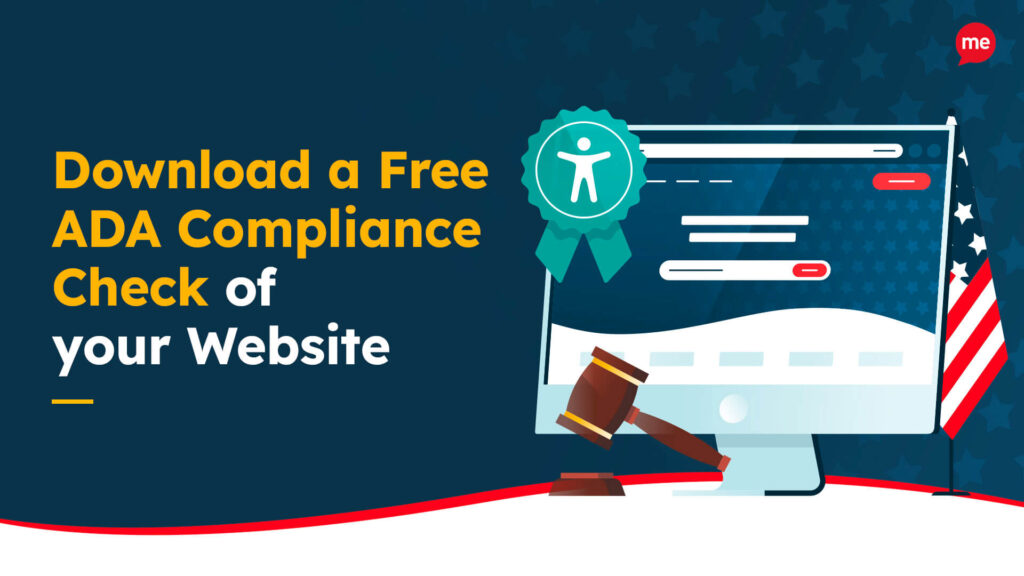
























Free ADA Compliance Audit of your Website
Run a free scan of your website's homepage to identify any ADA violations. Then, use our recommendations to implement fixes and achieve ADA compliance.
The Americans with Disabilities Act is a civil rights law designed to protect people with disabilities from any form of discrimination by providing equal access to public services, jobs, transport, digital content, and more. With 1 in 4 adult Americans having some kind of disability, the ADA is one of the most important laws in the US that protects millions of citizens in many areas of life.
A quick summary of the Americans with Disabilities Act (ADA)
The ADA prohibits discrimination on the basis of disability in the same way that civil rights laws prohibit discrimination on the basis of race, color, sex, national origin, age, and religion. This guarantees that people with disabilities have equal opportunities when it comes to jobs, buying goods and services, accessing government programs, and accessing online content.

This means that the ADA applies to employers, transport providers, government agencies, telecommunications providers, and any business or organization open to the public. Compliance with the ADA is essential for avoiding fines and legal action while also ensuring equal access and inclusivity, both of which are key factors when it comes to building trust and brand reputation.
Who does the ADA protect?
The ADA is designed to protect people who have disabilities. As established by the ADA, a person with a disability is someone who:
- Has a physical or mental impairment that substantially limits one or more major life activities
- Has a history or record of such an impairment (such as cancer that is in remission)
- Is perceived by others as having such an impairment (such as a person who has scars from a severe burn)
This covers a wide range of disabilities, both visible and invisible. A few examples of disabilities protected by the ADA include:
- HIV
- Cancer
- Autism
- Epilepsy
- Diabetes
- Cerebral palsy
- Traumatic brain injury
- Intellectual disabilities
- Blindness or low vision
- Deafness or hearing loss
- Major depressive disorder
- Post-traumatic stress disorder
- Mobility disabilities such as those requiring the use of a wheelchair, walker, or cane

This list barely scratches the surface, as many other disabilities covered by the ADA are not listed here. That said, it should give you a good idea of the most common.
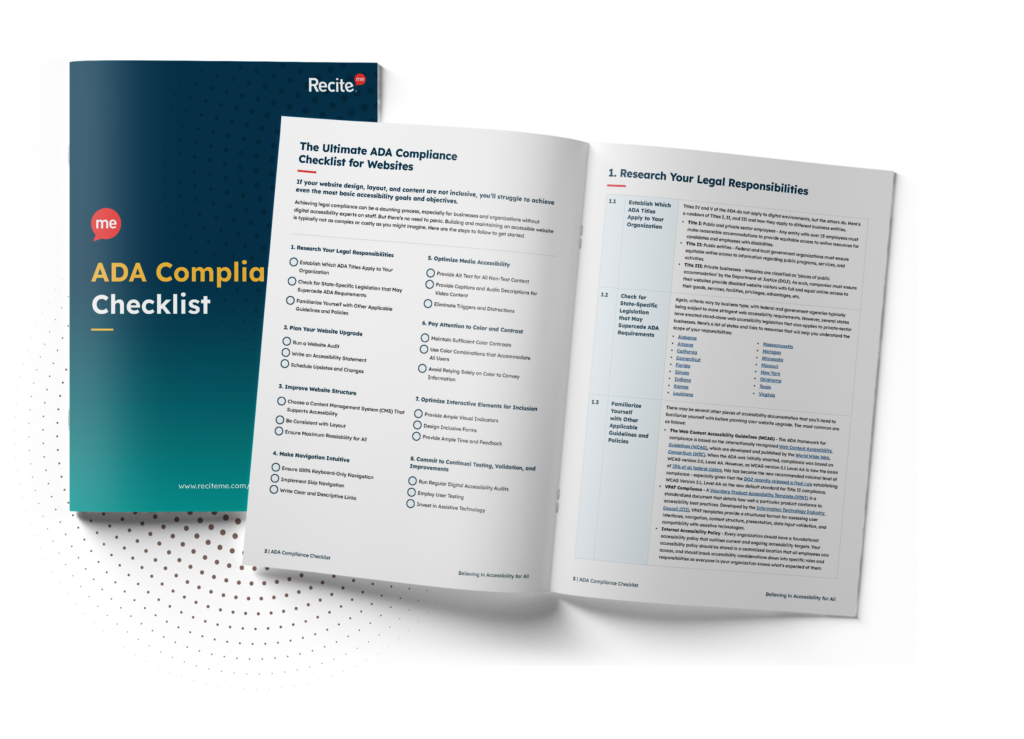
Want to make sure your website is compliant with the Americans with Disabilities Act? Then unlock the ADA compliance checklist now. Discover actionable steps to ensure ADA compliance, helping you avoid lawsuits and any other negative consequences of non-compliance.
How everyone benefits from ADA compliance
The ADA was designed to protect people with disabilities, but it is a law that benefits everyone. Removing barriers and improving accessibility allows organisations to create physical and online environments that are easier to navigate for all.
For example, clear signage in the workplace can make it easier for everyone in the event of an emergency. Transcribed video content can help people in noisy environments to understand what is being said. Structured online content that is logically organized will be easier to read for all users, not just those using screen readers.
How does the ADA protect people with disabilities?
The ADA protects people with disabilities by providing clear guidance on how organisations can improve accessibility. Non-compliance can lead to costly legal consequences, so organizations are required to take action to ensure both physical and digital accessibility.
The act mandates compliance with WCAG 2.1 Level AA
The ADA was enacted before the rise of the internet, but with so much of life and business being digital these days, the Department of Justice (DoJ) interprets the act to apply to all digital environments. In practice, this involves compliance with the Web Content Accessibility Guidelines (WCAG) 2.1 Level AA. This is considered to be the gold standard in terms of digital accessibility.
WCAG 2.1 Level AA establishes guidelines for making all web content accessible, which is broken down into four core principles:
- Perceivable: Users must be able to recognize and use your online services with the senses available to them.
- Operable: Users must be able to find and use your content, regardless of how they choose to access it.
- Understandable: Users must be able to understand your content and how it works.
- Robust: Content should be interpreted reliably by a wide variety of user agents, including assistive technologies like screen readers.
Physical spaces must be made fully accessible to people with disabilities
The ADA also requires that physical spaces must be made fully accessible to people with disabilities. Businesses and public bodies are required to make changes where it is “readily achievable”, which means without significant difficulty or expense. In practice, this often involves wheelchair accessible entranceways, ramps and lifts, accessible bathrooms, clear signage, lower service counters, and appropriate parking spaces.

Examples of businesses and other organizations that are open to the public that must adhere to the ADA include:
- Gyms
- Hotels
- Restaurants
- Retail stores
- Movie theaters
- Day care centers
- Doctors’ offices and hospitals
- Private schools (including housing)
- Organizations offering courses or examinations
Lawsuits and fines are issued for non-compliance
Non-compliance with ADA can lead to lawsuits and significant fines. Maximum penalties can range between $55,000 and $75,000 for first-time violations, while subsequent violations can result in fines of up to $150,000.
Even if there are no fines, legal settlements can cost an organization tens or hundreds of thousands of dollars when you factor in legal fees and remediation costs. Financial penalties are also just one part of a broader risk landscape, as non-compliance can lead to lasting damage in terms of loss of customers and revenue and a damaged brand reputation.

Which organizations need to comply with ADA guidelines?
ADA compliance is a requirement for many different types of organizations. Each of the act’s titles outlines the type of organizations, criteria, and sectors where ADA applies. This includes:
Title I: Employers with 15+ employees
Businesses with 15+ employees are legally required to provide accessible hiring processes, workplace accommodations, and accessible digital programs for training and internal communication. Employees with disabilities must also have equal opportunities for career advancement.
Title II: State and local government websites
Public entities must remove barriers to digital platforms to ensure websites and apps are fully accessible to those with disabilities. This can include steps such as ensuring content is compatible with screen readers, using color contrast for visibility, and mouse-free navigation.
The DoJ recently announced two key deadlines for ADA Title II compliance:
- April 26, 2027 – Entities serving a population over 50,000 must be ADA-compliant.
- April 26, 2028 – Entities serving 50,000 or fewer people, and special district governments, must be ADA-compliant.
Title III: Public-facing businesses
Public-facing businesses include both physical locations, like restaurants and hotels, as well as digital platforms like e-commerce stores. This means all businesses, facilities, and websites that serve the public must be compliant with ADA Title III.
Title IV: Telecommunications companies
Companies that provide video and phone services must comply, which can involve providing transcriptions and relay services to users with hearing impairments.
Organizations can get a free accessibility scan to take a step towards ADA compliance
These days, most organizations have digital platforms, including websites and mobile applications. These platforms must be ADA-compliant in order to avoid legal action and fines. ADA compliance also prevents users from exclusion.
A free accessibility scan is a smart step towards ADA compliance. It will analyze your website and highlight any issues that do not align with the WCAG 2.1 Level AA criteria. AI-driven fixes can then be made instantly to remove barriers and ensure accessibility. Manual checks can be time-consuming, and it is easy to make mistakes, but an accessibility scan will quickly scan your entire digital landscape to find any hidden issues.
Keep in mind that accessibility is not a one-time fix. Regular scans should be performed to ensure long-term compliance. This is particularly important for organizations that regularly publish new content and perform website/app updates.
Free ADA Compliance Audit of your Website
Run a free scan of your website's homepage to identify any ADA violations. Then, use our recommendations to implement fixes and achieve ADA compliance.
Make sure your organization is ADA-compliant
The ADA is designed to protect individuals with disabilities and provide equal access to employment, goods and services, and government programs. For organizations, compliance is much more than a box-ticking activity and a way to prevent costly legal fees and penalties; it is about removing barriers, promoting inclusivity, and protecting brand reputation.
Take the first steps towards compliance today by requesting a free ADA compliance check of your website’s homepage. You can also reach out to a member of our team for more personalized support.
ADA Protected Disabilities FAQs
Looking for a recap or quick summary? Here are a few of our most frequently asked questions to help you get to grips with the essentials:
Is autism protected under ADA?
Yes, autism is protected under the ADA as a disability that can substantially limit life activities.
Is ADHD protected under ADA?
ADA protects individuals with ADHD, which can require organizations to make workplace accommodations.
Is anxiety protected under ADA?
Anxiety can be a grey area, but anxiety disorders are considered to be mental health disabilities, which are protected by the ADA if they substantially limit life activities. That said, documentation from a healthcare provider will likely be required to prove the limitation. Workplace accommodations can include flexible scheduling and environmental changes, such as a quiet workspace.
Is pregnancy protected under ADA?
Pregnancy is not directly protected under the ADA, but accessibility benefits everyone, including pregnant women who can sometimes find accessibility challenging in physical environments.
Is PTSD protected under ADA?
Yes, PTSD is protected under ADA and considered a disability that can require employers to provide reasonable accommodations and protects against discrimination during the hiring process.
Need more help becoming ADA compliant?
The following resources are packed full of actionable tips and expert advice for making your digital content compliant with the Americans with Disabilities Act:
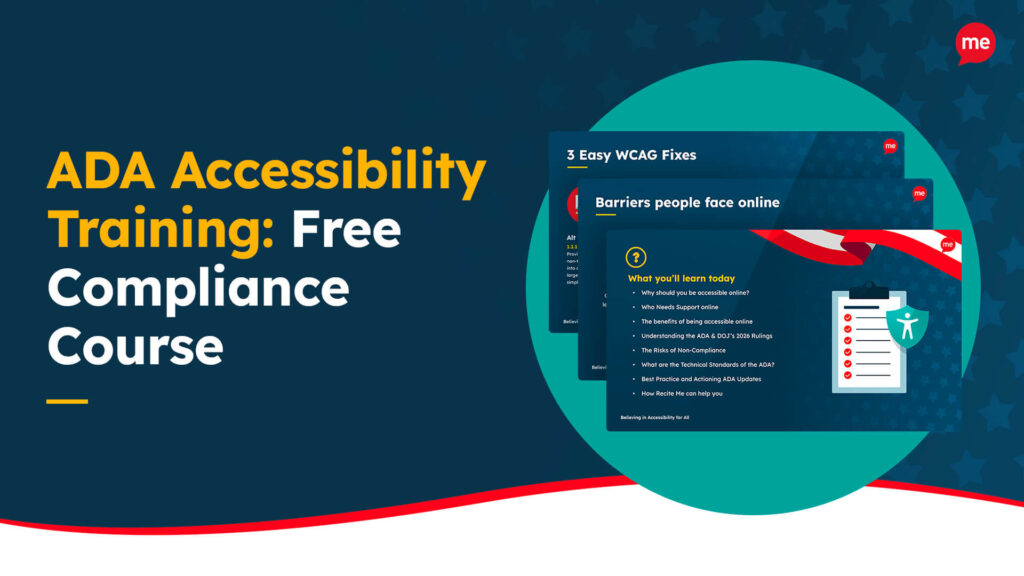
Free ADA Accessibility Training
Take the first step to ADA compliance by completing our training course.
Free ADA Accessibility Guide
Ensure your organization is meeting the requirements for ADA compliance.